
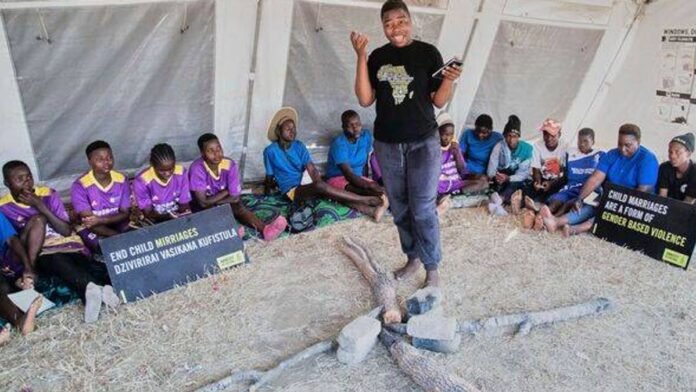
Young girls in Zimbabwe are challenging the harmful tradition of “Nhanga,” once a practice designed to prepare child brides for marriage by teaching them how to satisfy their adult husbands sexually. Historically, Nhanga was a secluded space where girls were trained in obedience to their future spouses, undergoing rituals to become suitable brides. This included learning domestic tasks and sexual duties under the guidance of older women.
However, in Shamva, this tradition has taken a positive turn. The Nhanga now serves as a safe and empowering environment where girls freely discuss important topics like sexuality, child marriage, pregnancy, education, and legal rights. The focus is on empowering girls to resist early marriage, a prevalent issue in Zimbabwe, with one in three girls marrying before turning 18, according to UNICEF.
Despite laws banning child marriage in Zimbabwe and other African countries, poverty, weak law enforcement, and deep-rooted cultural beliefs continue to perpetuate this harmful practice. One survivor, Samantha Chidodo, shares her story of being forced into marriage at a young age but eventually breaking free from the cycle of abuse. Supported by the Rozaria Memorial Trust, she returned to school and became a leader in the modern Nhanga movement.
The new approach has gained momentum, with over 200 girls in Shamva now participating in Nhanga sessions, inspiring schools across Zimbabwe to adopt similar models. Local leaders are cracking down on early marriage, imposing penalties and promoting education for affected girls. However, challenges remain as cultural attitudes and misconceptions about pregnancy and marriage persist among adults.
Experts like Nyaradzai Gumbonzvanda emphasize the importance of shifting social norms and empowering young girls to combat child marriage. By engaging with the girls themselves and fostering positive peer influence, the community aims to break the cycle of early marriages and empower girls to pursue their dreams.