
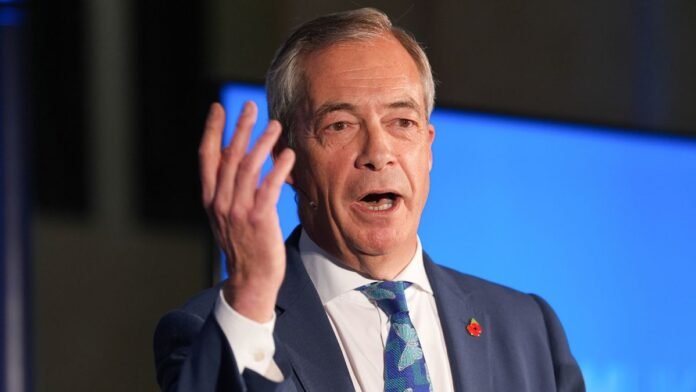
Nigel Farage faces criticism for proposing significant cuts to public spending, with accusations of advocating a return to harmful austerity measures. During a speech in London, the Reform leader omitted support for the pensions triple lock, questioned the minimum wage for young individuals, and pledged reductions in welfare expenditure. Additionally, he abandoned his proposed £90 billion tax reductions following criticism from experts.
Following the address, Farage was swiftly condemned for presenting an “incoherent saloon bar budget” that favored hedge funds and financial investors over ordinary workers. The Labour Party criticized Farage for advocating damaging austerity measures that would endanger public services, including the NHS, schools, and pensions, while scrapping investments in local infrastructure and clean energy.
Reform UK’s agenda includes substantial cuts to the benefits system and a downsizing of the public sector, aiming to reassess all disability claims in person. Farage’s recent proposal to eliminate Personal Independence Payments for those with anxiety received strong backlash, labeled as “cruel, heartless, and reprehensible.”
Moreover, Farage reiterated his commitment to scrapping the Net Zero initiative, denouncing its high costs and pledging to end related subsidies. This move has drawn criticism from various quarters, with concerns raised about potential job losses in sectors like electric vehicles and green steel.
Farage also expressed skepticism about the current minimum wage for young workers, suggesting it might be too high given recent changes to National Insurance Contribution thresholds. Reform UK’s manifesto for 2024 included plans to halve the foreign aid budget to fund tax cuts, a proposal that remains contentious.
Farage’s defense of proposals to grant non-dom tax status to wealthy individuals and his efforts to retain them in the UK have faced opposition, with critics characterizing the plan as a means for foreign billionaires to evade taxes. Labour, in particular, has criticized these measures as facilitating tax avoidance by the wealthy.
In summary, Farage’s economic plans have sparked controversy and divided opinions, with concerns raised about the potential impact on public services, welfare, and environmental initiatives.