
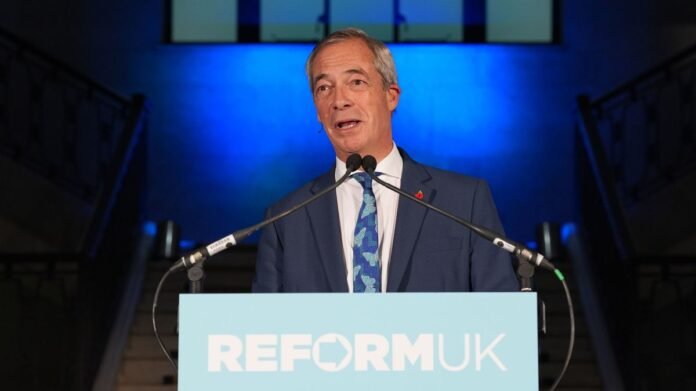
Shape-shifting politician Nigel Farage revealed his underlying Thatcherite ideology recently by advocating for significant spending cuts and extensive deregulation. Working-class communities should beware of supporting Farage’s Reform UK party, as his proposed policies are reminiscent of the divisive and harsh measures of the 1980s.
Farage backtracked on his previous pledge of £90 billion in tax cuts, exposing Reform as a party that failed to fulfill its promises in the last election. His shift towards advocating for limited public ownership of struggling industries contradicts his earlier stance on nationalization. Criticism from Kemi Badenoch labeling Reform as a left-wing party has been overshadowed by the party’s harsh stance on benefit cuts.
Attempting to stoke animosity towards certain groups like asylum seekers and minorities may only take Reform so far. Older white voters in specific regions may desire improvements in their lives but are wary of a return to the callous Thatcherism era. Despite attempts to mask it, Reform’s core values are perceived as unpleasant and detrimental, evident in their proposed tax increases and council mismanagement.
Individual incidents, like Sarah Pochin’s controversial remarks and Lee Anderson’s regressive proposals, underscore the concerning ideologies within Reform. Farage and other key members of the party are aligned with Thatcherite principles, signaling a potential return to past economic hardships and social unrest.
As Farage’s true intentions become more apparent, supporters may find themselves at odds with the direction of Reform. The emergence of Farage’s true nature may lead to a reconsideration of backing the party. The political game is on, with uncertainties and challenges ahead.