
WARNING: This article contains details about violence against children and attempted suicide.
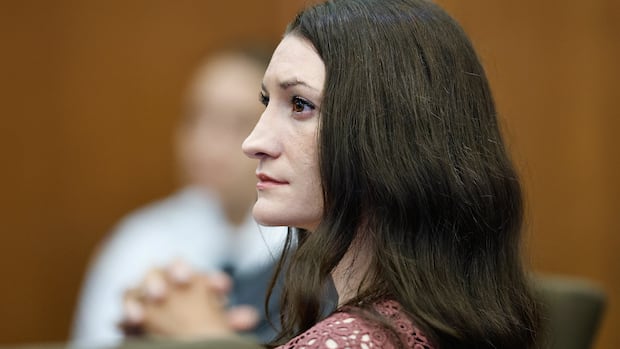
On Thursday, the judge presiding over the Lindsay Clancy murder case declined to rule her not guilty, rejecting a defense motion that claimed insufficient evidence existed to establish her culpability in the deaths of her three children.
In Clancy’s initial trial, which concluded on September 4 with a jury that could not reach a verdict, the defense maintained that she was not criminally responsible due to a mental disorder, specifically a rare condition known as postpartum psychosis. Consequently, the defense did not challenge the fact that the 36-year-old former labor and delivery nurse committed the acts at her family’s Massachusetts residence in 2023.
However, during a hearing earlier this week, Clancy’s lawyer, Kevin Reddington, attempted to convince the judge that the prosecution had failed to provide evidence of Clancy’s guilt. In response, prosecutors asserted that substantial evidence existed, dismissing Reddington’s assertion as “laughable.”
In his decision, Judge William Sullivan indicated that he was obliged to evaluate the evidence in the light most favorable to the prosecution — emphasizing that it was the jury’s role, not the judge’s, to determine the credibility of expert witnesses who testified that Clancy was not accountable for her actions due to mental health issues.
“There was evidence presented, both physical and circumstantial, that would allow a rational trier of fact to conclude beyond a reasonable doubt the elements of the murder charge,” Sullivan stated.
Acknowledgment of mental health issues during the trial
At the initial trial, prosecutors recognized that Clancy suffered from mental health issues, which included months of treatment and a stay in a psychiatric facility, but contended that she was aware of her actions when she strangled her children — the youngest being just eight months — before attempting to take her own life.
Sullivan had previously declared a mistrial with the jury divided 11 to 1 in favor of acquitting Clancy of the murder charges.
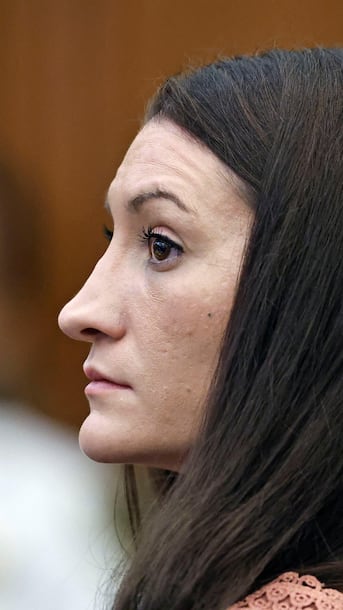
The trial of Massachusetts mother Lindsay Clancy has highlighted the issue of maternal mental health, with some medical professionals suggesting this may be the only positive aspect of the tragic situation. Her defense team argues that she should not be held criminally accountable for the deaths of her children due to her struggles with bipolar disorder and postpartum psychosis.
During Tuesday’s hearing, Reddington argued that the case was fundamentally based on conjecture and outlined the weaknesses in the prosecution’s arguments. He claimed there was minimal police investigation and raised significant doubts regarding Clancy’s mental state outside of the night of the tragic events and her inability to recall what transpired.
Throughout the trial, jurors were presented with evidence that Clancy reported hearing voices instructing her to harm Cora, 5, Dawson, 3, and eight-month-old Callan Clancy. Her DNA was discovered on exercise bands used to strangle them. Prior to the trial, Reddington submitted a motion stating that Clancy was willing to acknowledge her involvement in the children’s deaths in writing.
“For the first time, the defendant is claiming that there is no evidence she committed these acts,” prosecutor Shanan Buckingham expressed to the judge. “I would argue that the entire record is extensive in supporting the conclusion that she did this.”
No decision made regarding a potential second trial
Clancy remains facing murder charges and is anticipated to continue her stay at a psychiatric hospital until her situation is resolved.
Prosecutors have yet to determine whether they will move forward with a second trial. They may opt to retry her on first-degree murder charges or consider pursuing lesser charges, such as second-degree murder or manslaughter, or possibly dismiss the case altogether.
If convicted of murder, Clancy could have faced a life sentence. Conversely, if acquitted, the judge might have mandated her confinement to a mental health facility.
Patrick Clancy, her former husband who discovered the children’s bodies, has stated in interviews that he forgives her for the tragic events. The livestreamed trial captivated public attention and shed light on the importance of maternal mental health following childbirth.
If you or someone you know is in crisis, here are resources for assistance:
- Canada’s Suicide Crisis Helpline: Call or text 988.
- Provincial and territorial mental health support.
- Kids Help Phone: 1-800-668-6868. Text 686868. Live chat counselling available on the website.
- This guide from the Centre for Addiction and Mental Health provides advice on discussing suicide with individuals you are concerned about.