
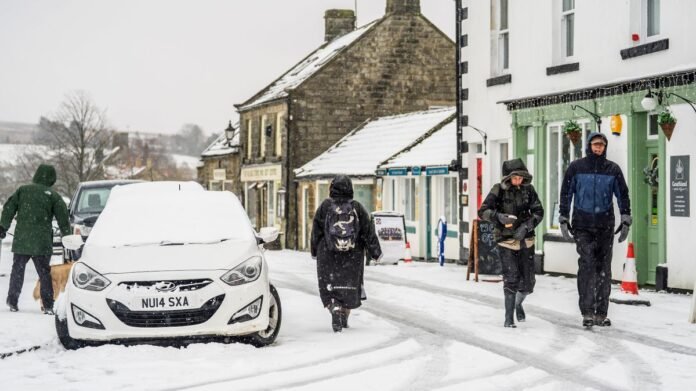
Nearly 1.5 million households in England and Wales have been granted cold weather payments this winter, as confirmed by the government. These payments of £25 are issued when the temperature in a specific postcode area drops to zero degrees Celsius or below for seven consecutive days. The recent freezing weather conditions have led to additional payments for eligible households.
The drop in temperatures below zero at over 30 Met Office weather stations nationwide triggered the payments. The Department for Work and Pensions reported that over £35 million has been distributed to vulnerable households in England and Wales this winter under the scheme running from November 1, 2025, to March 31, 2026.
Individuals receiving Pension Credit are typically eligible for Cold Weather Payments. Those on Universal Credit, Income Support, income-based Jobseeker’s Allowance, income-related Employment and Support Allowance, or Support for Mortgage Interest may also qualify based on certain criteria related to their employment status, health conditions, disabilities, or caregiving responsibilities.
Although Scotland does not receive Cold Weather Payments, residents may qualify for an annual Winter Heating Payment instead. Secretary of State for Pensions, Pat McFadden, emphasized the importance of such support for vulnerable households during extreme weather conditions. Additionally, he highlighted other support measures, such as a higher National Living Wage, energy bill discounts, and Winter Fuel Payments for pensioners, aiming to alleviate financial burdens across the nation.
Pensioners with low incomes are encouraged to apply for Pension Credit, which not only provides financial assistance but also grants access to various support services like help with housing costs, NHS dental treatment, council tax discounts, energy cost assistance, and free TV licenses for individuals over 75 years old. Despite the availability of support, statistics from 2023/24 revealed that a significant number of eligible pensioners are not claiming Pension Credit, missing out on substantial financial aid.
Organizations like Age UK stress the importance of ensuring that older individuals with low incomes receive the necessary financial assistance to cover essential expenses like heating bills. They welcome the government’s investment of £35 million to provide support to individuals struggling to heat their homes, emphasizing the ongoing collaboration needed to ensure that vulnerable populations receive the crucial financial aid they require.