
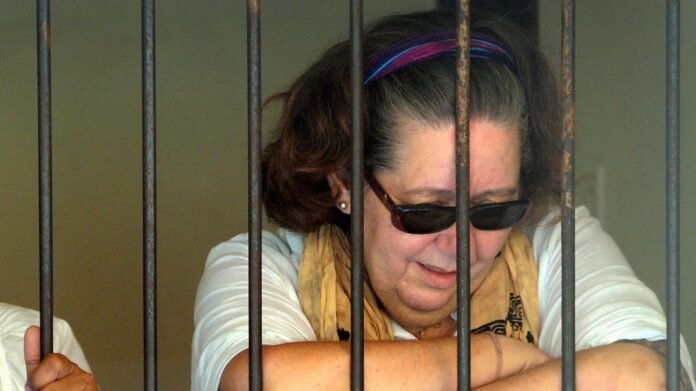
After enduring a challenging 12-year period, Lindsay Sandiford, a British grandmother, faced a death sentence in 2013 for trafficking cocaine worth $2.14 million (£1.6 million) hidden in her suitcase. Indonesian laws on drug-related crimes are severe, often resulting in death sentences, with a grim execution process involving firing squads.
Sandiford, a former legal secretary, spent years in Bali’s Kerobokan Prison awaiting her fate. However, in a surprising turn of events, an agreement signed by the Indonesian government will see her and another British national, Shahab Shahabadi, repatriated to the UK. The transfer is expected to take place soon after finalizing technical arrangements.
During her time in custody, Sandiford engaged in knitting, selling her creations to support legal battles and teaching fellow inmates her craft. Despite her resilience, the prolonged stay on death row took a toll on Sandiford, leading her to form a bond with fellow inmate Heather Mack, convicted in a high-profile murder case.
Mack revealed Sandiford’s emotional struggles, indicating her distress upon witnessing the execution of other inmates. Sandiford’s longing for death while on death row was a poignant reflection of her mental state amid the looming threat of a firing squad. Nevertheless, as the Indonesian government eases its strict drug laws, Sandiford, now in her late 60s, is set to be released, with a press conference scheduled for her impending freedom.
Sandiford’s potential release aligns with Indonesia’s recent trend of granting freedom to certain long-serving drug offenders. The British national’s optimistic outlook is evident in her charitable acts towards fellow inmates and the support she has received from Foreign Office officials. Sandiford’s journey from death row to the verge of freedom underscores the evolving legal landscape in Indonesia.