
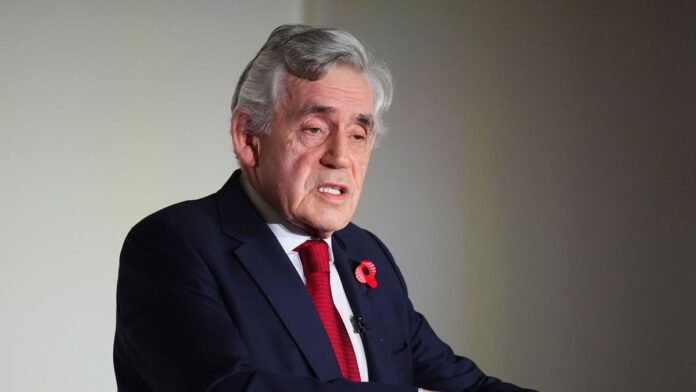
Gordon Brown has urged for the complete removal of the two-child benefit cap, increasing pressure on Keir Starmer’s administration to take action. The former Labour Prime Minister criticized the high levels of child poverty in the UK, describing it as a stain on the country’s conscience during a significant address on Thursday. This push comes as Keir Starmer contemplates revising or eliminating the Conservative-led policy that aid organizations claim is contributing to the entrapment of children in poverty by limiting Child Tax Credits and Universal Credit to the first two children in a family.
There are indications that the government is exploring alternatives such as a tapered rate or a three-child benefit cap to lessen the impact of the austerity measure. A review on child poverty is anticipated to coincide with Chancellor Rachel Reeves’s Budget announcement on November 26.
Brown emphasized the negative impact of the two-child rule, attributing the escalating child poverty rates to this policy. He stressed the necessity of abolishing the rule entirely to achieve the government’s poverty reduction goals and ensure that a significant percentage of young children are school-ready. Brown also criticized the so-called “rape clause,” an exemption related to non-consensual conception, which would persist if the policy is not completely abolished.
Furthermore, Brown condemned the introduction of the two-child rule by former Chancellor George Osborne, refuting the notion that the policy was aimed at addressing irresponsible parenting among benefit recipients. He highlighted that a majority of families impacted by the rule have a member who is employed, transitioning between jobs, or caring for a newborn.
At an event commemorating the 60th anniversary of the Child Poverty Action Group, Brown commended former Deputy Prime Minister Angela Rayner for her efforts. He expressed shock at the current statistic of approximately 4.5 million children living in poverty, the highest figure in six decades. Brown emphasized the necessity of organizations like the Child Poverty Action Group to address societal inequalities and injustices.
Homelessness minister Alison McGovern, speaking at the same event, hinted at the Government’s forthcoming strategy to address child poverty by focusing on improving family incomes and alleviating the financial burdens associated with poverty. She acknowledged that child poverty hinders families’ progress in life by entangling them in financial struggles.
In response, a Government spokesperson affirmed that the upcoming strategy will target the structural and underlying causes of child poverty.