
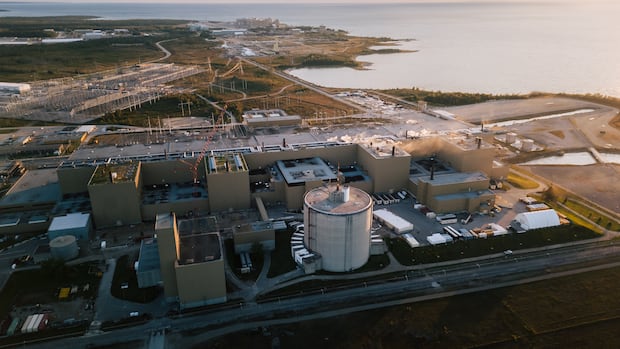
Bruce Power, the private company managing the Bruce Nuclear Generating Station, is facing two charges under the federal Fisheries Act following the death of millions of fish in the facility’s cooling water intake system in 2025.
The charges were brought against Bruce Power after a CBC News investigation disclosed, for the first time publicly, the alarming extent of the incident.
According to an internal report from Bruce Power, approximately 8.1 million gizzard shad congregated near the nuclear plant during an unexpected cold snap on February 13, 2025. The small, temperature-sensitive fish were attracted to the warm water released into Lake Huron by the plant over a two-month span, from February to March 2025.
As a result, the fish became ensnared and perished against the intake screens of the plant in such vast quantities that one reactor had to be taken offline and another had to decrease its output, putting additional stress on the province’s electrical grid amid a prolonged cold winter.
The company’s own analysis indicated that the extensive fish kill resulted from an “organizational failure” to adjust to the shifting environmental conditions brought on by climate change.
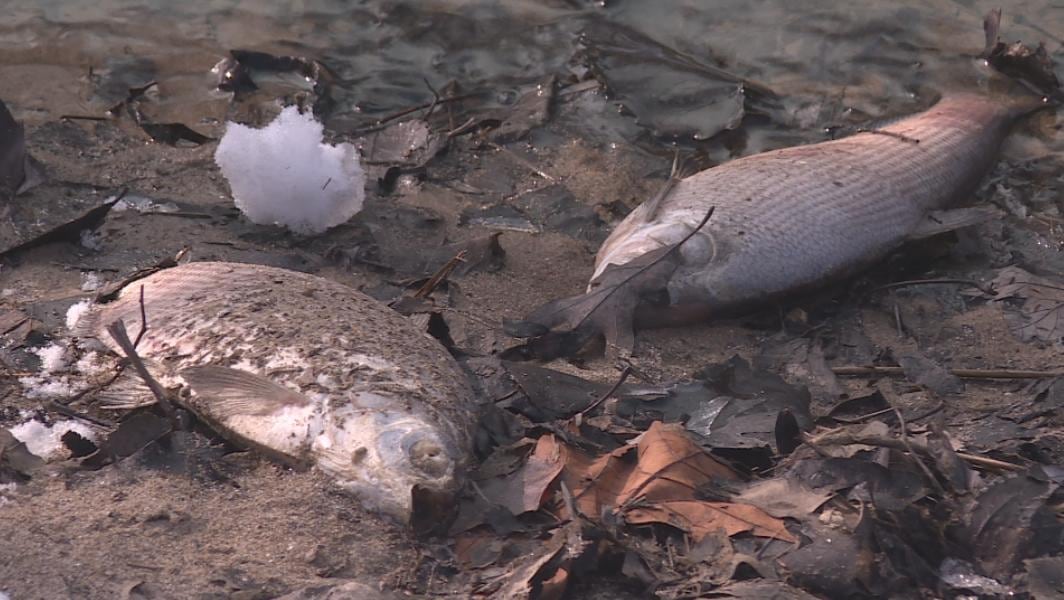
Dead gizzard shad along the Thames River in 2021. This temperature-sensitive species washed ashore along Lake Huron for several days during the 2025 fish kill at Bruce Power. (Colin Butler/CBC)
Fisheries and Oceans Canada (DFO) estimates that between 3.3 and 4.3 million fish died from February to March 2025—more than 200 times the annual authorized weight limit for Bruce Power.
Carcasses of the gizzard shad washed up on the shores of nearby communities for days, while Bruce Power utilized a crane to remove millions of dead fish from the cooling water channels before disposing of them in a landfill, as indicated by provincial records.
Under the federal Fisheries Act, Bruce Power was charged last month for causing fish deaths due to non-fishing industrial activities and for breaching the terms of its environmental permit, which restricts the company to 6,600 kilograms of dead fish each year.
“As this case is currently in court, we are unable to comment on our intended plea or provide further commentary regarding the charges,” stated Megan Adams, Bruce Power’s director of corporate communications, in an email.
The company is scheduled to appear in Ontario provincial court on November 24.
Fines contribute to environmental restoration
In a recent press release, Bruce Power indicated that it has been transparent with regulators, including DFO and the Canadian Nuclear Safety Commission, as well as local First Nations and municipalities about the fish die-off.
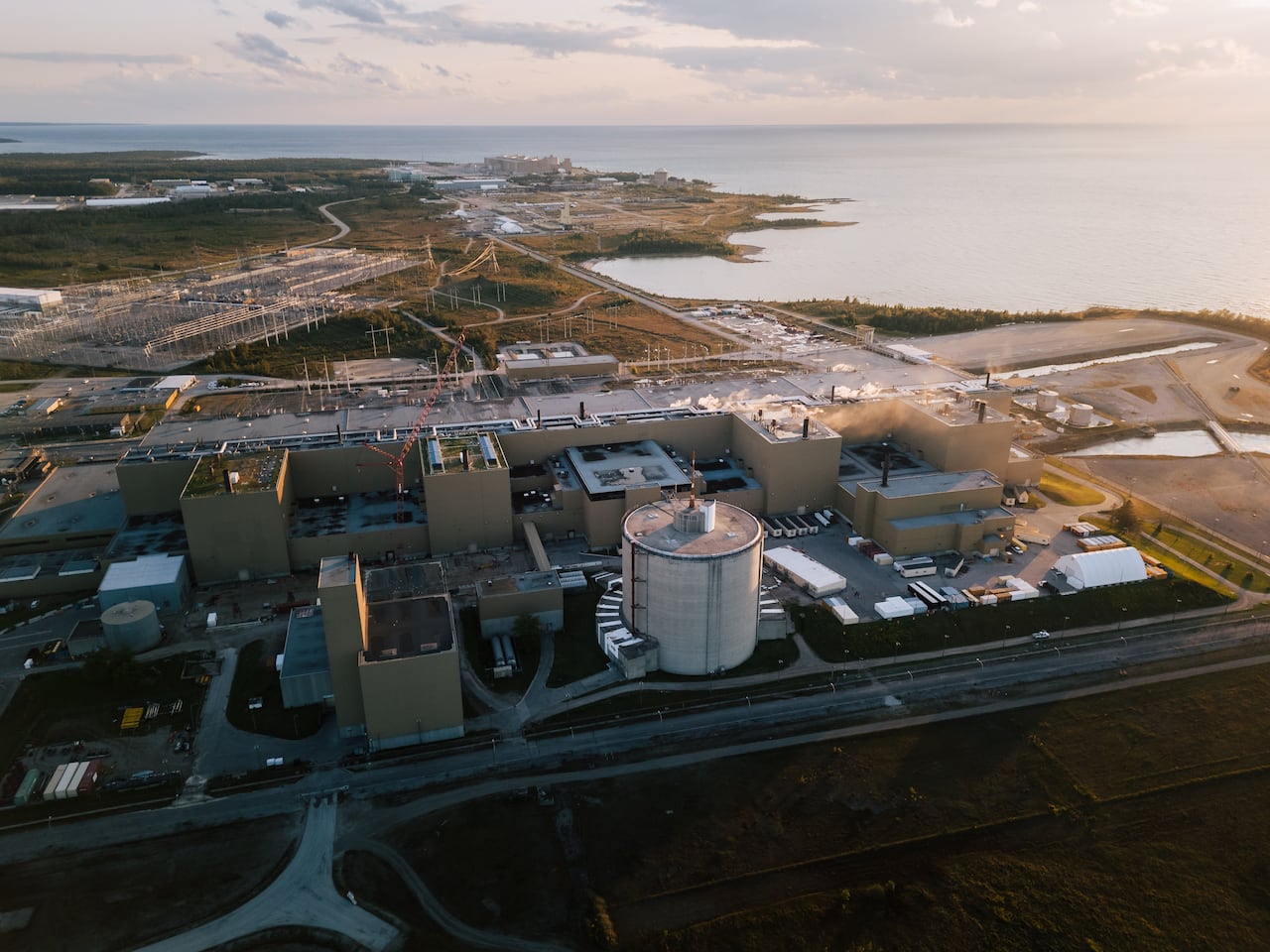
An aerial view of the Bruce Power site near Tiverton, Ont. (Submitted by Chad Richards)
However, according to Theresa McClenaghan, a lawyer and executive director of the Canadian Environmental Law Association (CELA), prosecutors do not need to demonstrate that the company intended to kill fish to prove an offence.
“The courts regard Fisheries Act violations as serious matters,” she noted.
For a first offence, fines can vary from a few thousand dollars to $200,000, she explained, aimed at deterring future violations and conveying the court’s disapproval.
When a fine is imposed, the funds are allocated to the federal Environmental Damages Fund to assist in conservation, habitat protection, or restoration, according to McClenaghan.
The court may also recommend directing the funds to a specific organization or project, including an Indigenous nation or environmental research initiatives.
‘A massive fish trap’
Since the incident, Bruce Power has invested over $10 million in mitigation strategies, including nets to prevent fish entry, acoustic and strobe-light deterrents, sonar, cameras, and artificial intelligence for monitoring fish behavior, alongside enhanced research in the lake.
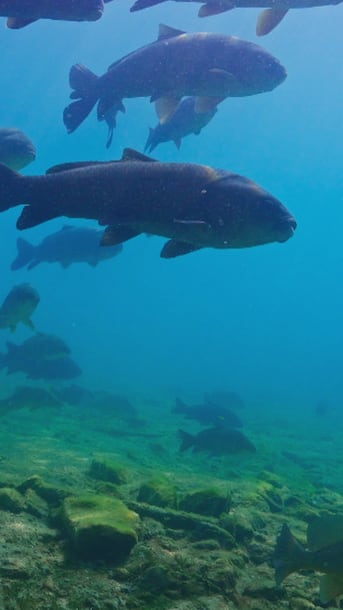
Using a $250,000 underwater drone, documentary filmmakers Yvonne Drebert and Zack Melnick are capturing footage from parts of the Great Lakes that are often too deep or remote to observe directly.
Ryan Lauzon, a fisheries biologist advising the Saugeen Ojibway Nation, whose traditional territory encompasses the nuclear facility, mentioned during a recent site visit last year that he observed deficiencies in the mitigation measures.
“I noticed fish swimming right up to the acoustic deterrent system. There were gaps in the nets intended to keep fish out. Eventually, they had to remove the net because it was filled with algae and dead fish.”
Invasive zebra and quagga mussels have diminished the plankton that sustains Lake Huron’s food web, Lauzon remarked, resulting in less food availability for other species and raising concerns about the loss of millions of gizzard shad, which are prey for trout, pike, and walleye.
Lauzon, who has authored a paper on the fish die-off, noted that smaller die-offs occurred at the plant in 1977 and 2023. While Bruce Power has invested millions in mitigation, he believes these measures do not address the warm-water discharge that initially attracts the fish.
- Rare footage reveals ‘fish city’ near an Ontario nuclear plant on Lake Huron
- Lake Huron’s ‘fish city’ is a sign of trouble at nuclear plant, says Ontario First Nation
“Regrettably, the plant functions as a massive fish trap,” he stated. “Until we can determine the efficacy of mitigation measures and address the issue of attraction, I believe there remains a significant risk.”
The cooling systems that attract these fish are also encountering escalating challenges due to climate change, remarked McClenaghan, emphasizing that the incident might indicate a need to reconsider cooling methods for nuclear plants in a changing climate.
“Among the options being considered are cooling towers or cooling loops instead of the current system,” she explained. “The lakes are acting as heat sinks.”