
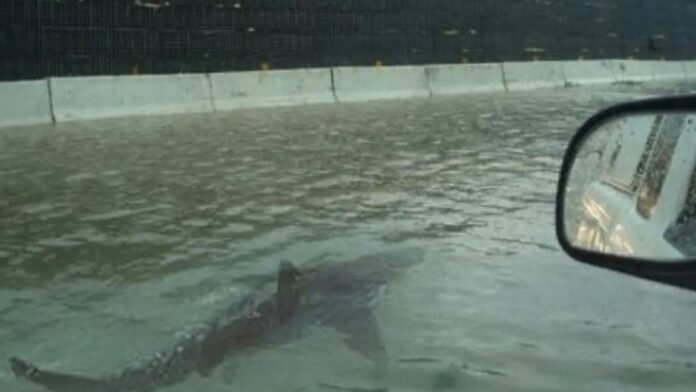
Fake AI-generated videos circulating online during the passage of Hurricane Melissa in Jamaica are causing concerns, depicting unrealistic scenarios such as sharks swimming in flooded streets. The storm, classified as a Category 5 hurricane, is currently battering Jamaica with expectations of widespread devastation, marking the strongest storm to hit the island in recorded history spanning 174 years. Despite governmental efforts to prepare for the impact, Kingston, the capital city, remains mostly deserted as residents heed warnings and stay indoors.
The proliferation of fake content on social media, including manipulated images of sharks in floodwaters, has added to the anxiety among the population. While some of these misleading videos bear the watermark of OpenAI’s Sora model, others lack clear indicators of being digitally altered. Jamaican Information Minister, Senator Dana Morris Dixon, has been actively debunking false information in press conferences, urging the public to rely on official sources for accurate updates.
In addition to the shark-related fake videos, there are other misleading clips showing dramatic scenes of flooding and people fleeing from large waves. Concerns have been raised by meteorology experts, such as University of Oklahoma’s Prof Amy McGovern, highlighting the dangers posed by misinformation during a severe weather event like Hurricane Melissa. The storm is expected to track through southwestern Jamaica towards the north, impacting regions like New Hope and St. Ann parish before heading towards Cuba.
Reports of landslides, fallen trees, and power outages have surfaced ahead of Melissa’s landfall, with Jamaican officials warning of a slow recovery process due to the lack of infrastructure capable of withstanding a Category 5 hurricane. Prime Minister Andrew Holness emphasized the importance of swift recovery efforts in the aftermath of the storm to address the extensive damage caused by Hurricane Melissa.