
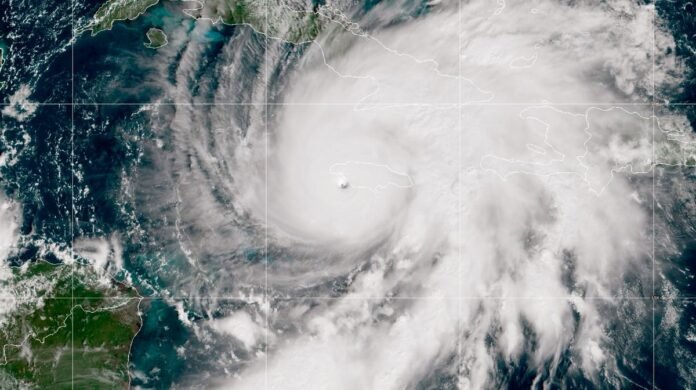
A devastating storm struck Jamaica yesterday, causing widespread destruction and loss of life on the Caribbean island. Hurricane Melissa, with wind speeds reaching 185mph, claimed the lives of at least seven individuals, destroyed homes, and triggered extensive flooding.
Termed the “storm of the century,” Hurricane Melissa was only 5mph short of the most powerful storm ever recorded in that region. Among the 58,000 British nationals on the island were Neville, the father of murdered Stephen Lawrence, and the family of professional footballer Raheem Sterling.
Forecasters have issued warnings that Hurricane Melissa, the strongest storm in Jamaica’s history, may intensify further as it moves towards Cuba and the Bahamas in the coming days. The Jamaican government initiated evacuations from high-risk zones and shut down all airports, urging residents to seek shelter.
Residents and visitors on the island experienced the storm’s wrath firsthand. Rebecca Chapman, celebrating her 25th wedding anniversary in Jamaica, described an eerie atmosphere with a strange roaring sound and deserted surroundings. Holidaymaker Andrew Tracey shared his nervousness as the powerful winds shook his hotel walls and balcony.
The situation prompted urgent responses from authorities and rescue teams. The Foreign Secretary highlighted the severity of Hurricane Melissa, emphasizing the need for precautions and support for affected British nationals. The Royal Navy’s HMS Trent is prepared for potential rescue operations, while efforts are ongoing to ensure the safety of all individuals, especially in the face of widespread power outages and communication failures.
Despite evacuation orders, some residents chose to stay in their homes, complicating rescue efforts. Emergency teams faced challenges in reaching those stranded by floodwaters and debris. The impact of the storm on Jamaica’s infrastructure and economy is expected to be substantial, with long-term recovery efforts anticipated.
In neighboring Cuba, significant evacuation measures were enforced, and international aid preparations were underway. The United Nations World Food Programme positioned emergency supplies in Haiti, recognizing the urgent need for assistance across the region.
As the region braces for further impact, the collective response to Hurricane Melissa underscores the resilience and preparedness needed to navigate such natural disasters effectively.