
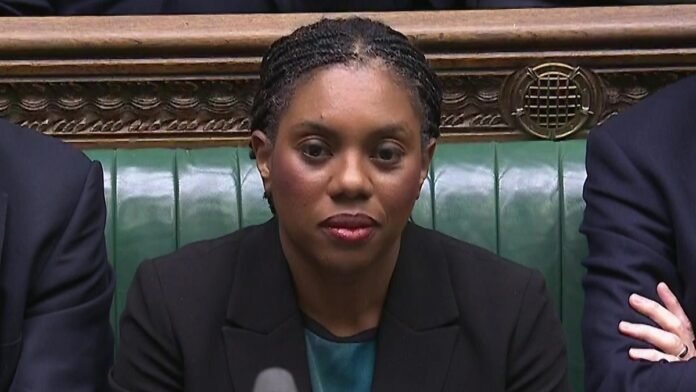
Kemi Badenoch faces criticism for allegedly lacking the strength to oppose Robert Jenrick’s endorsement of a burqa ban. In contrast to Badenoch’s stance that the Conservative party would not enforce such a ban or monitor women’s attire, Jenrick, the Shadow Justice Secretary, expressed support for prohibiting burqas. He emphasized the importance of upholding fundamental British values and addressing societal challenges like sharia courts and burqa-wearing.
Drawing attention to Italy’s intention to outlaw burqas and niqabs in public spaces, Jenrick advocated for a similar ban in the UK. Suella Braverman, a former Home Secretary and current Tory MP, echoed support for a burqa ban, questioning why the UK has not taken similar action to Italy. The discussion around banning burqas has also seen involvement from other political figures like Nigel Farage, who labeled burqas as “anti-British” and called for a debate on the issue.
In response to Jenrick’s remarks, Downing Street emphasized the importance of religious tolerance while affirming individuals’ right to express their religious identity through attire, as long as it complies with the law. The debate on burqa bans has sparked varying opinions within political circles, with Labour MP Sam Rushworth criticizing the proposed ban as contradictory to British values.
The Labour party weighed in on the matter, highlighting the apparent conflict between Badenoch and Jenrick’s positions and questioning Badenoch’s leadership capability. The Muslim Council of Britain expressed concerns about the proposed burqa ban, viewing it as an unnecessary distraction from more pressing issues requiring political attention.