
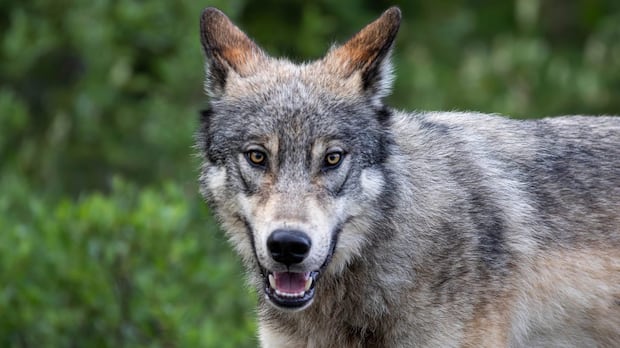
Nine wolves have died after being struck by vehicles on a section of unprotected highway within Yoho National Park over the last five years.
Parks Canada has reported that the most recent incident involved an adult female wolf, which was killed on October 17.
Experts indicate that these fatalities underscore the critical need for wildlife fencing and crossings in a highway area where enhancements have been suggested for several years.
The unprotected segment extends approximately 40 kilometers west of Lake O’Hara through Yoho National Park.
The park is home to a primary wolf pack. According to Parks Canada, two of the nine wolves that lost their lives on the highway were part of this pack, one in 2023 and another in 2024. Both were fitted with tracking collars.
Parks Canada notes that this highway segment is located within the pack’s territory, and the ages and locations of the other seven wolves indicate they might also belong to the pack. Nonetheless, the agency cannot definitively confirm their membership.
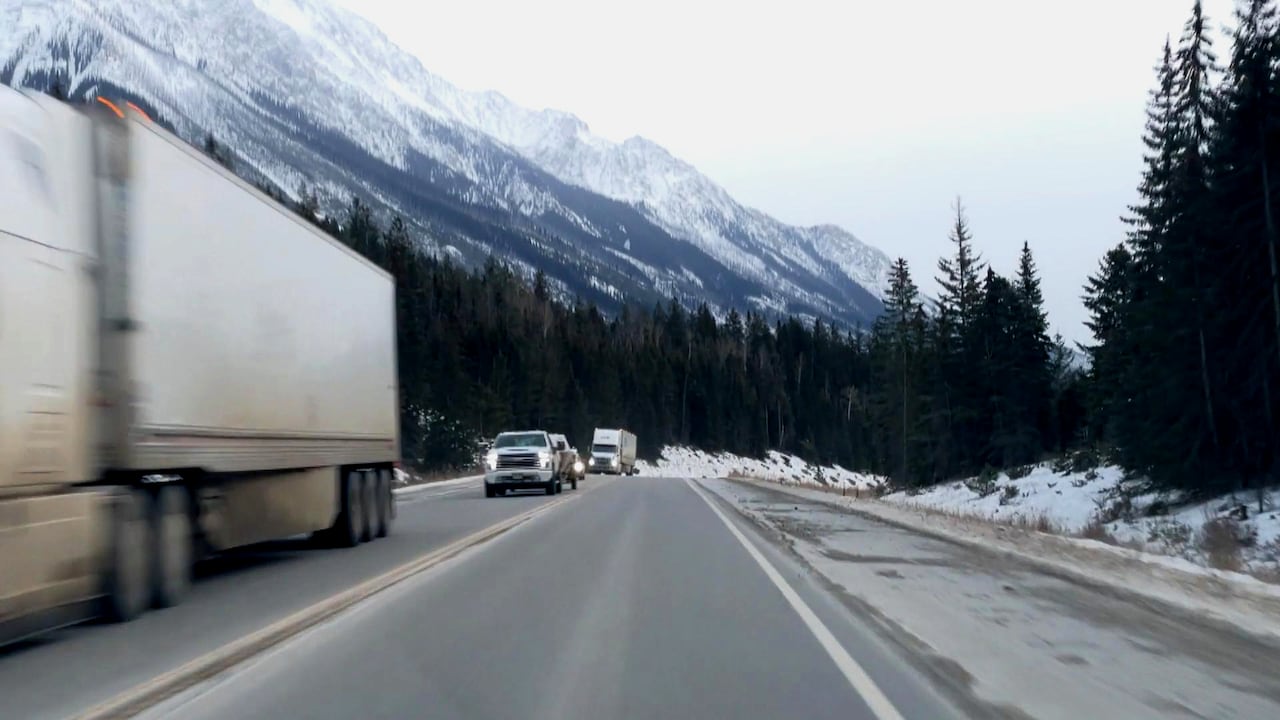
Much of the Trans-Canada Highway through Yoho National Park remains a two-lane, undivided road without wildlife fencing or crossings. (Evelyne Asselin/Radio-Canada)
Parks Canada also states that it is currently unaware of the size of the Yoho pack. The agency explains that tracking and collaring wolves poses challenges for researchers.
According to Shelley Alexander, a wolf researcher at the University of Calgary, wolf packs usually consist of five to nine individuals.
Wolves are known to live in close-knit family groups, and the loss of any single member can significantly impact the entire pack, she adds.
“Undoubtedly, it will alter the dynamics,” Alexander asserts. “Each member has distinct roles within the family.”
She also explains that the loss of adult wolves can impair the pack’s hunting capabilities and hinder the transmission of knowledge across generations.
Having researched wolves in Banff National Park during the 1990s and 2000s, when portions of the Trans-Canada Highway lacked wildlife fencing and crossings, Alexander notes that vehicle collisions were a major factor in the decline of a wolf family in the park around two decades ago.
“The population was drastically reduced, and it took considerable time for them to repopulate and reestablish,” she mentions.
She warns that a similar situation could occur in Yoho if the majority of the nine wolves killed on the highway were indeed part of the park’s main pack.
Furthermore, she points out that roads are not the only threats these wolves encounter.
“The reality for most of these wolves is that they cannot spend their entire lives within a protected area,” she explains. “They will have to navigate through regions where they can be hunted or trapped.”
Advocacy for highway enhancements
Tony Clevenger, a wildlife ecologist who has researched highway safety for three decades, authored a report in 2017 detailing wildlife fatalities on the highway running through Yoho.
He emphasizes that this highway section is particularly notable because neighboring mountain parks, such as Banff, have exceptional protections for wildlife.
“This section in Yoho National Park is equally crucial as the corresponding area in Banff National Park, yet it remains unaddressed,” he observes.
Clevenger adds that various species, including grizzly bears, cougars, elk, and deer, also fall victim to vehicle strikes on this highway.
Research conducted in Banff National Park demonstrates that wildlife fencing and crossings are effective in safeguarding animals.
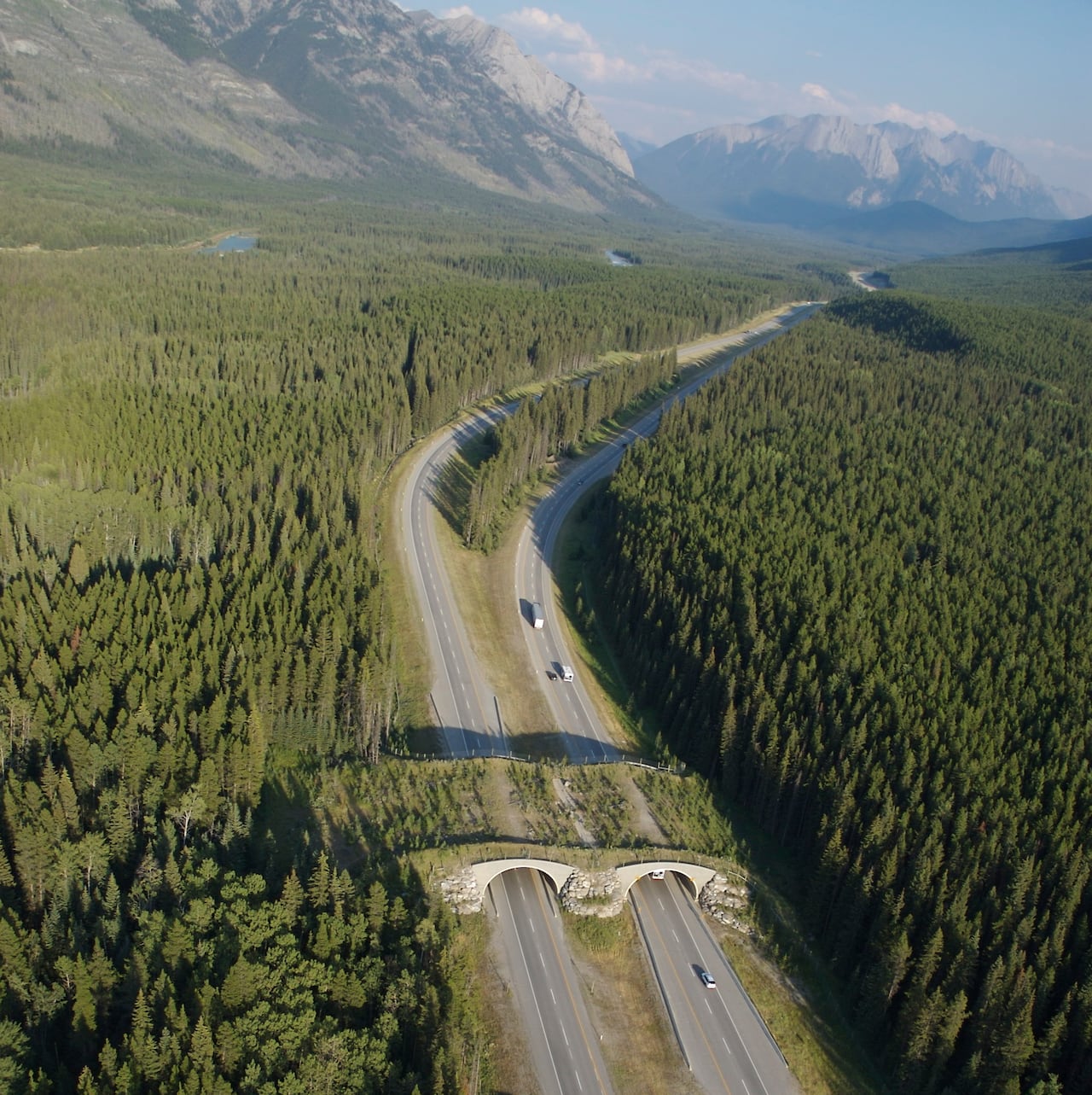
Parks Canada states that Banff National Park features 82 kilometers of wildlife fencing and 44 wildlife crossings — the highest concentration globally. (Parks Canada)
Since the installation of fencing and crossing structures in Banff, Parks Canada reports that wildlife-vehicle collisions have decreased by over 80 percent.
Clevenger warns that the highway also poses risks to drivers due to wildlife collisions, particularly as it remains a two-lane road. He notes that a significant portion of the Trans-Canada Highway in the surrounding area has been expanded to four lanes, with barriers to separate opposing traffic, thereby minimizing the chances of head-on collisions.
Parks Canada has intentions to widen the highway and construct wildlife fencing and crossings.
However, the project has not yet secured federal funding.
In a statement to CBC News, Environment and Climate Change Canada (ECCC) did not provide any details on potential funding for the highway upgrades.
ECCC mentioned that it has allocated over $375 million to the Trans-Canada Highway within four mountain national parks since 2014.
Parks Canada asserts that it takes wildlife mortality seriously and continues to track wildlife populations and incidents involving vehicles in Yoho National Park.
The federal agency also indicates that it employs various methods to mitigate animal deaths, such as wildlife monitoring, management of wildlife attractants, and installation of driver-awareness signage.
Clevenger expresses frustration over the government’s inaction.
“They’ve been discussing this for a very long time. It’s about time they complete the project.”
Clevenger emphasizes that park visitation continues to rise annually, leading to a higher likelihood of wildlife fatalities on the highway until these improvements are implemented.