
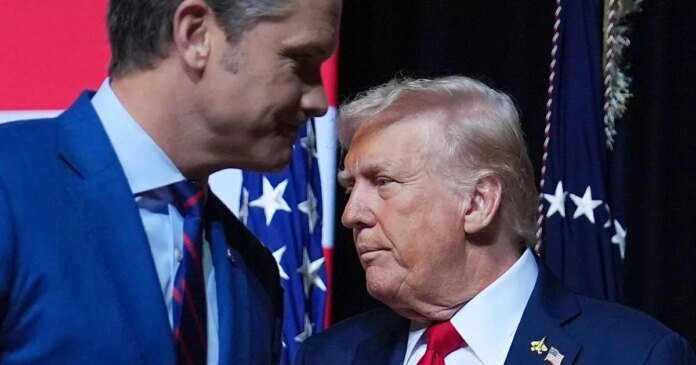
In a concerning development, President Donald Trump has called upon US military generals to assist him in combating what he referred to as “internal enemies.” This move signifies a significant escalation in his ongoing conflict with political adversaries.
During a hastily convened meeting, numerous high-ranking generals were gathered by the President, with many having to travel from various conflict zones globally. Upon their arrival, they faced criticism and intimidation from “Secretary of War” Pete Hegseth, who demanded that all Generals and Admirals maintain physical fitness standards annually.
Trump also indicated his intention to discard what he deemed as restrictive rules of engagement, suggesting a potential willingness to utilize the military in addressing protests and law enforcement activities.
In a bold assertion, Trump warned of imminent dismissals, stating, “If I don’t like somebody, I’m going to fire them on the spot,” underscoring his uncompromising stance towards dissent within the military ranks.
Furthermore, the President’s speech took a divisive turn as he openly targeted his political opponents, accusing them of disrespect towards the military. He hinted at the possibility of deploying more military forces domestically, a departure from established precedents and possibly infringing upon legal boundaries.
Despite historical examples of using the military for maintaining order, Trump’s approach raised concerns regarding potential violations of the Posse Comitatus Act of 1878, which prohibits the military from engaging in domestic law enforcement.
Trump’s rhetoric extended to naming specific cities for intervention, signaling a confrontational approach towards addressing internal challenges. His remarks elicited a mixture of uneasy laughter and apprehension among the military leadership present.
It is vital to note that utilizing the military for domestic policing is restricted by law, indicating potential legal ramifications for such actions. Trump’s statements have stirred debates and drawn attention to the boundaries of presidential authority in military matters.