
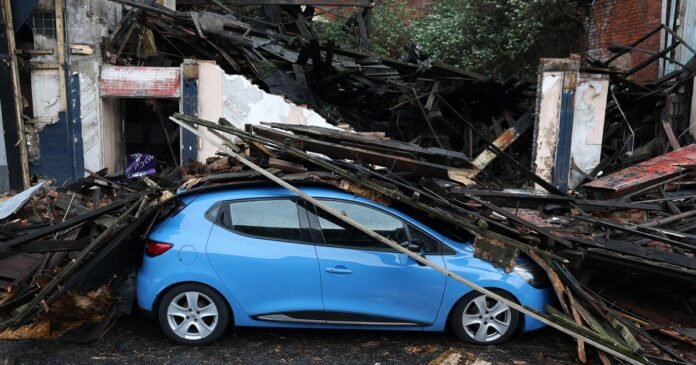
Britons are being urged to assemble an emergency kit in light of Storm Amy’s impact on the UK, causing widespread power outages and flooding.
The Met Office has issued weather warnings covering the entire country, with the storm disruptions expected to persist over the weekend.
Gusting at 96mph, severe winds hit Tiree in the Hebrides on Friday, prompting a ‘danger to life’ alert that remains in effect, leading to travel disruptions, power line damages, and high waves.
In Northern Ireland, over 20,000 individuals are currently experiencing power loss, as more intense winds and heavy rainfall are predicted for today.
Individuals under the weather advisories are advised by the Met Office to prepare a flood plan and an emergency flood kit for safety measures.
Furthermore, there is a looming threat of additional power failures that could impact services like mobile phone networks.
The Met Office has issued guidelines on bracing for power cuts, recommending the public to stock up on essential items such as torches, batteries, and a mobile phone power pack.
In Scotland, residents can assess their homes’ vulnerability to flash floods by visiting the Scottish Environment Protection Agency website.
To craft an effective flood plan, it is suggested to compile a list of important contact numbers for the local council, insurance firms, and utility providers.
Moreover, securing valuables in a safe place, knowing how to shut off electricity or gas, and offering assistance to vulnerable neighbors are valuable steps in preparation.
Flood kits should include essential documents, torches, first aid supplies, warm clothing, water, snacks, a radio, and items for baby or pet care.
In light of the storm, homeowners are advised to utilize a simple household item – placing a piece of toilet paper near windows can help retain warmth and prevent drafts, as recommended by Insurance specialist Kara Gammell.
Gammell explains that sealing air gaps not only maintains warmth but also prevents dampness and mold growth, even in areas not typically prone to flooding risks.
It is crucial to stay updated with changing weather warnings and road conditions, adapt travel plans as needed, and be prepared for potential delays during adverse weather conditions.