
Just because something isn’t remembered, it doesn’t mean it never occurred.
This is the core message of a new public awareness initiative addressing drug-facilitated sexual assault, also referred to as chemical submission, which is led by Caroline Darian and includes her mother, Gisèle Pelicot.
Pelicot became a worldwide emblem of defiance when she chose to reveal her identity during the trial of her spouse, Dominique Pelicot, who was found guilty in 2024 of systematically drugging and sexually assaulting her for over ten years in their home in France, as well as inviting other men to participate.
“Drug-facilitated abuse is a quiet kind of violence. It truly strips a person of their consciousness, autonomy, and even their recollection,” Darian explained to As It Happens host Nil Kóksal.
“The aim of this campaign was to illuminate the unseen and to give a voice to the unmentionable, to reveal what often remains hidden.”
Initiated in France last month, the campaign is led by MendorsPas (Don’t Put Me To Sleep), an organization established by Darian following the trial to raise awareness about chemical submission and to connect victims with support services.
The initiative showcases close-up portraits of individuals who have experienced chemical submission, including one of her mother.
Each portrait features a purposely unfinished sentence. For instance: “For years, I was ____ by my husband,” or “On my anniversary, I was ____ by my father-in-law.” The missing word is represented by a line drawn over the subject’s mouth.
“The word exists but remains unvoiced,” states a press release from Havas Paris, the advertising agency responsible for the campaign. “This serves as a reminder that drug-facilitated sexual assault can happen anywhere and is often committed by someone familiar to the victim.”
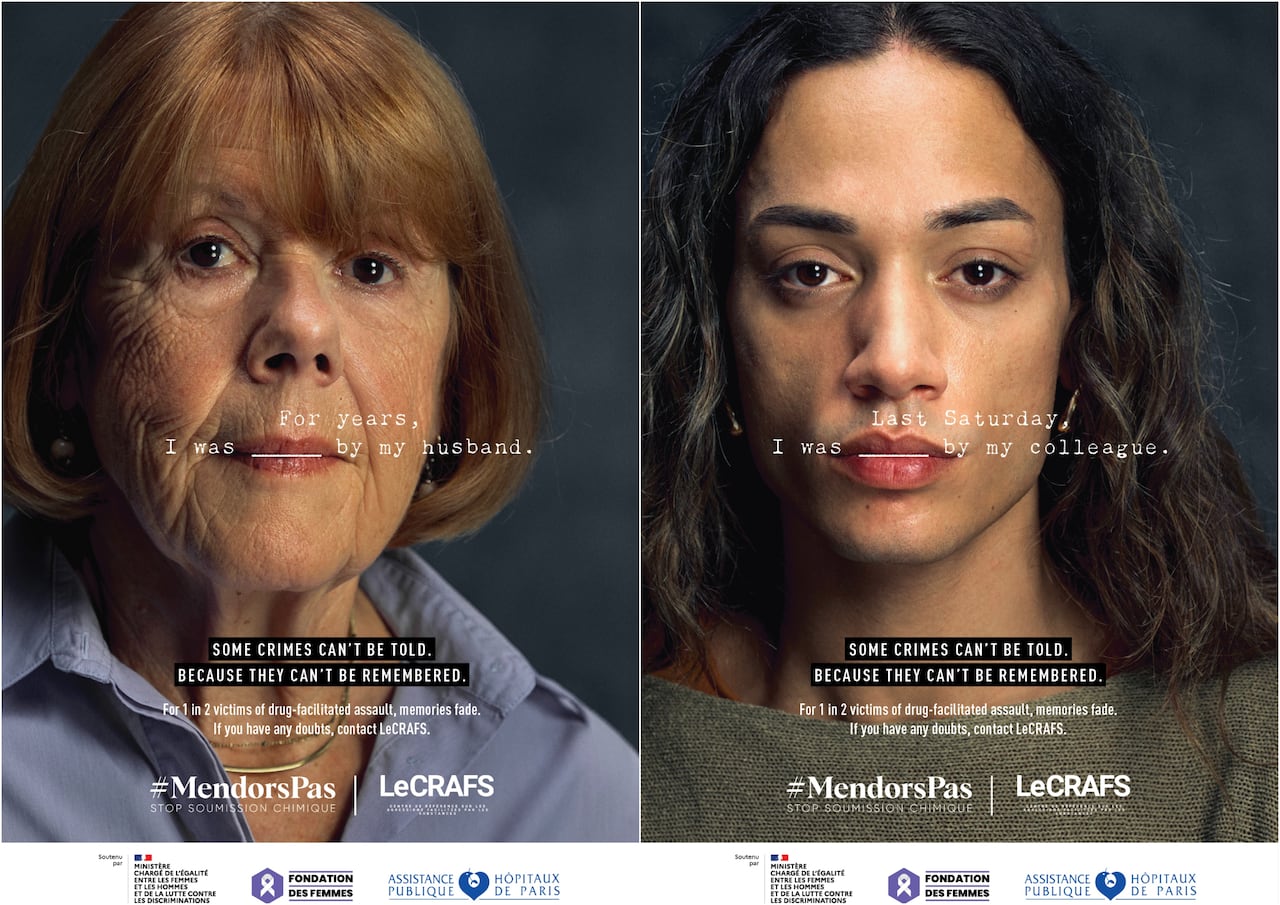
Posters from a new public awareness campaign about drug-facilitated sexual abuse — also known as chemical submission — led by Caroline Darian and featuring her mother, Gisèle Pelicot, left. (Havas Paris)
Approximately 75 percent of those who have experienced drug-facilitated sexual assault know their attackers, according to MendorsPas and the Rape, Abuse & Incest National Network.
“It could be a friend, a parent, or a coworker,” Darian mentioned. “Such incidents don’t only happen at parties. In most cases, they occur at home with someone you know.”
A period of estrangement
This is an issue that Darian understands all too well. Two images, depicting her in her underwear in her bedroom, were found on her father’s computer. In these photos, she appears either asleep or unconscious.
In her memoir published in 2025, I’ll Never Call Him Dad Again, she disclosed her belief that her father sexually abused her as well. Although he was convicted of distributing intimate images of Darian without her consent, he has denied all other accusations.
While promoting her book, Darian informed the Telegraph that her mother did not support or believe her and that she could never forgive her for that.
For a period of time, the two were estranged.
However, Darian now states that she and Pelicot are united in their battle against drug-facilitated sexual violence.
“We are more united than ever,” Darian expressed.
In an interview with CBC’s The Current earlier this year, Pelicot mentioned her anger on behalf of her daughter and her desire for her to find answers.
“At present, we are both trying to heal as best as possible, but we each experienced it differently and suffered in our own ways,” she noted. “For the children, he was their father… and everything came crashing down.”
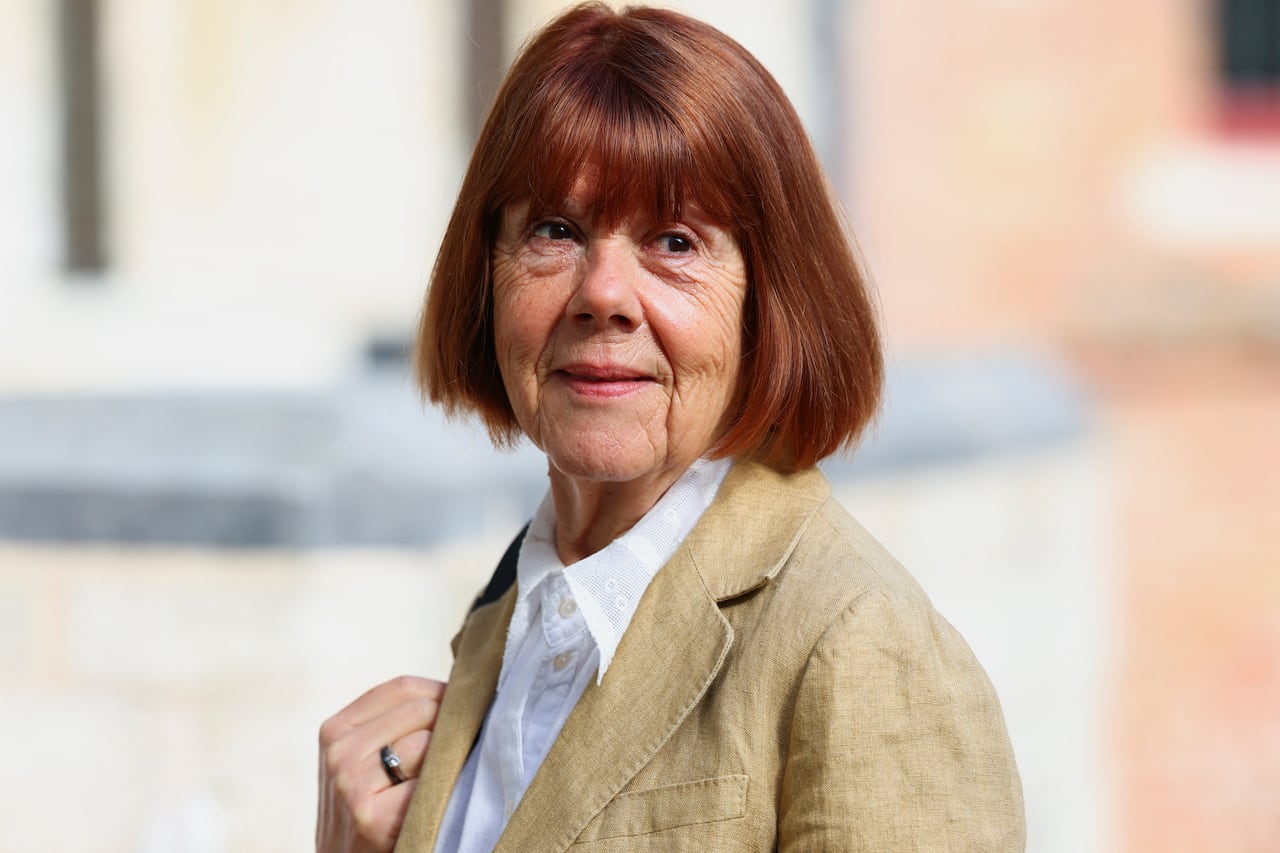
Pelicot, who waived her right to anonymity during her then-husband’s trial, has become an international figurehead for victims of sexual violence. (Piroschka van de Wouw/Reuters)
On Wednesday, the mother and daughter appeared together at a gala in New York City for the human rights organization Equality Now, where they were jointly honored with the 2026 Trailblazer Award for their advocacy work.
“This is a significant milestone for us,” Darian remarked. “We are incredibly thankful.”
Darian to Jane Doe: ‘You don’t have to bear the shame’
Darian expresses her hope that the campaign will aid in dismantling the stigma and silence surrounding chemical submission, motivate individuals to seek assistance, and, when feasible, pursue toxicology tests to validate their concerns.
Since the Pelicot verdict, numerous women have come forth with their experiences of chemical submission.
This summer in the U.K., a man pleaded guilty to repeatedly drugging and raping his girlfriend over a decade and encouraging others to do the same. Four men in Germany were found guilty of drugging and raping multiple women and distributing videos and tips in private messaging groups on how to evade detection.
“I believe that now no one can overlook the reality of chemical submission,” Darian stated.
This autumn, women online have rallied around Jane Doe, an anonymous student from Cornell University in Ithaca, N.Y., who claims she was gang-raped by fraternity members while heavily intoxicated.
In response to this case, Darian offered words of support for Jane Doe and a call to action for others.
“You don’t have to carry the shame alone, and you must remain resilient, believe in yourself, and continue to speak out,” she advised.
“This issue is not solely a women’s concern. It affects everyone. Society as a whole has a responsibility to assist victims and drive change.”