
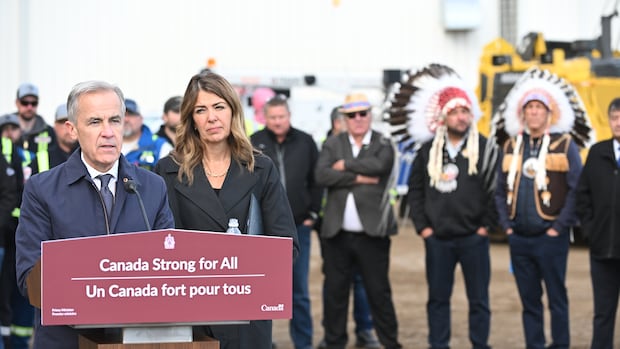
Residents of Sumas First Nation, located near Abbotsford, B.C., have become accustomed to oil spills, according to Chief Dalton Silver.
For many years, crude oil has been stored, diverted, and transported through the traditional lands of the First Nation. Silver opposed the Trans Mountain Expansion Project in 2024 but was unsuccessful in that battle.
Now, he is preparing for another challenge: the proposed Pacific Link pipeline, which is expected to follow a similar path to Trans Mountain.
“It will definitely cross our territory. There’s no doubt about that. Many of our people find this very concerning,” he stated.
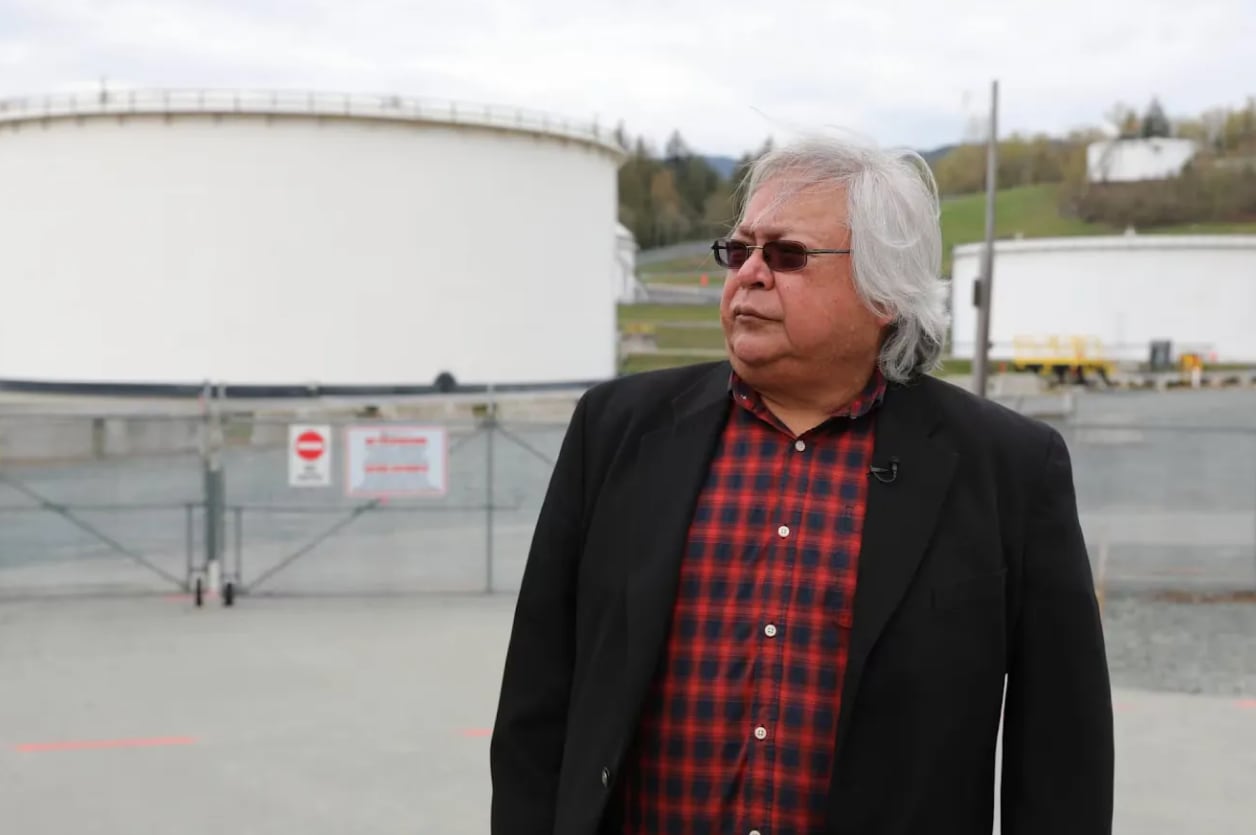
Chief Dalton Silver in front of the Trans Mountain facility on the Sumas First Nation’s traditional territory. He is contemplating legal action against the proposed Pacific Link pipeline. (Josh McLean/CBC)
Silver has long been concerned about the potential impact of spills on the community’s drinking water. He now fears that the Pacific Link project could exacerbate the situation.
“I oppose this project. The way it has been handled has not included our community at all,” he remarked. “The risks it poses to our land, fish, and wildlife are significant.”
Silver is one of several Indigenous leaders voicing objections to the pipeline plans laid out by the Carney government. Throughout various interviews, leaders from communities along the proposed pipeline route have expressed their concerns, while some have shown interest in seeing the project completed.
Many feel excluded from the discussions, despite the project’s potential to impact their communities.
Silver is contemplating a legal challenge, and other Indigenous leaders in British Columbia are considering similar actions. Some are even discussing direct actions, such as blockades.
Various concerns, pressing timeline
The Pacific Link project aims to transport a million barrels of oil daily from Bruderheim, Alberta, to Roberts Bank, British Columbia. Prime Minister Mark Carney has labeled the project as being in the national interest — indicating a desire for rapid construction.
During a recent announcement in Fort McMurray, Carney expressed his goal of having construction underway within a year, aiming to add billions to Canada’s GDP once the pipeline is operational.
Simultaneously, Carney has stressed the importance of responsible construction, considering environmental issues and Indigenous rights, and aims to establish the conditions for building the pipeline by September 2027.
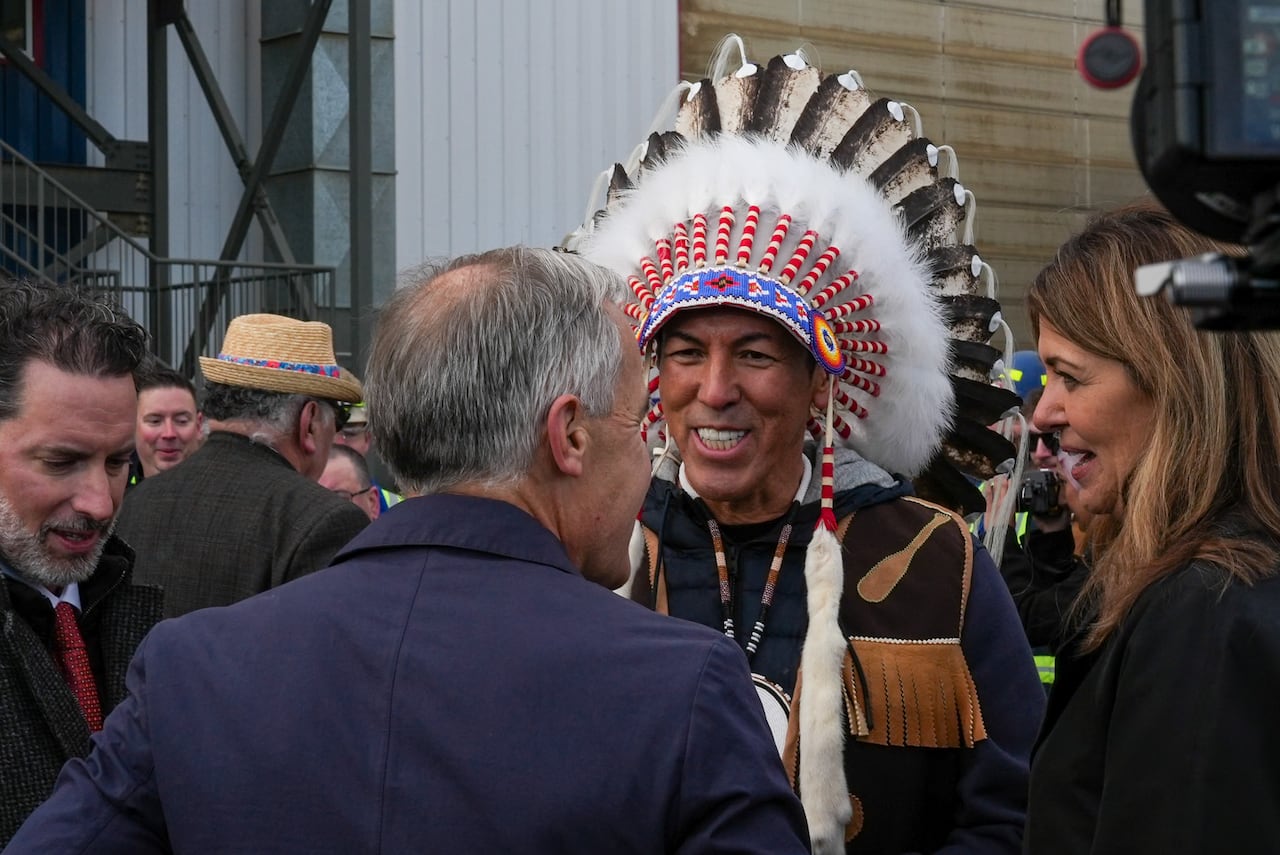
Chief Raymond Powder of the Fort McKay First Nation converses with Carney following the ceremony that outlined the next steps for the West Coast pipeline project. (Vincent McDermott/CBC)
Chief Raymond Powder of the Fort McKay First Nation is keen to capitalize on this economic opportunity. However, he feels that Carney’s timeline is rather rushed.
“The Liberal party promised to bolster the economy,” said Powder, who was present at the Fort McMurray event.
“I would appreciate a bit more time for careful consideration.”
While Powder is enthusiastic about the prospect of the pipeline, he insists that First Nations must have a substantial role in discussions, allowing them to voice concerns about potential environmental damage that could affect future generations.
“Our connection to the land is incredibly vital and important,” he added.
Worries about toxic byproducts
A significant concern revolves around oilsands tailings, the toxic material remaining from mining and extraction that can contaminate land and water.
“How Canada addresses these tailings remains to be seen, and the concerns are substantial,” said Treaty 8 Grand Chief Trevor Mercredi.
He attended Carney’s announcement but emphasized that his presence should not be interpreted as approval for the project.
“Being invited to the announcement does not equate to endorsing the project,” he explained. “There is no agreement, no consent. Many details still need resolution.”
A proposed West Coast pipeline has become the first project designated in the national interest, according to announcements made by the federal and Alberta governments. The Pacific Link pipeline will transport up to one million barrels of oil daily — a project that Prime Minister Mark Carney says will ‘transform’ the Canadian economy. The pipeline is expected to commence operations in 2032.
A representative for Environment Minister Julie Dabrusin stated that her department collaborates with Indigenous partners, provincial and territorial governments, industries, and other stakeholders to safeguard health, Indigenous rights, and the environment.
Environment and Climate Change Canada continues to explore methods for managing the water utilized in oilsands tailings ponds, and the Fisheries Act prohibits the deposit of substances that impair water quality to a level harmful to fish or their habitats, stated the spokesperson.
Who participates in the discussions?
Mercredi is particularly concerned about who is included in the discussions and who is not.
“This is causing divisions within our communities. Only select communities are being offered equity,” he noted.
When announcing the Pacific Link, Carney mentioned that Indigenous communities would collectively be offered at least a 10 percent stake.
In response to Mercredi’s concerns, the Privy Council Office (PCO) stated that Canada’s Major Projects Office, which oversees the approval process for projects like Pacific Link, has conducted over 140 meetings with Indigenous organizations.
“The consultation list was developed based on a preliminary analysis of traditional territories, records from the Trans Mountain Expansion Project, geographic proximity to the proposed corridor and marine terminal, and considerations of Canadian treaties and modern treaties, as well as input from federal and provincial sources,” a PCO spokesperson explained.
Some communities have partnered with the oil sector for years, positioning them to negotiate more effectively than others. Mercredi aims to ensure equitable benefits for all Indigenous nations.
For numerous communities, Silver claims, the economic prospect is too significant to overlook, despite their serious concerns regarding environmental ramifications.
“Many aspects are lacking and opportunities are scarce, so when financial incentives are offered … for some individuals, there is a genuine need,” Silver remarked.
He highlighted that some communities urgently require support for their educational and water infrastructure.
-
Carney, Smith say new West Coast pipeline could get oil companies building again
-
West Coast oil pipeline becomes 1st project designated in national interest
“You face challenges whether you proceed or not,” he added.
Robert Phillips, a political representative with the First Nations Summit in British Columbia, expresses a willingness to give Carney the benefit of the doubt.
“He has promised us that we will receive consent. He has assured us that there will be meaningful consultation. So I can only take him at his word,” he stated.
“The results will speak for themselves.”
Tag: rewrite-pending