
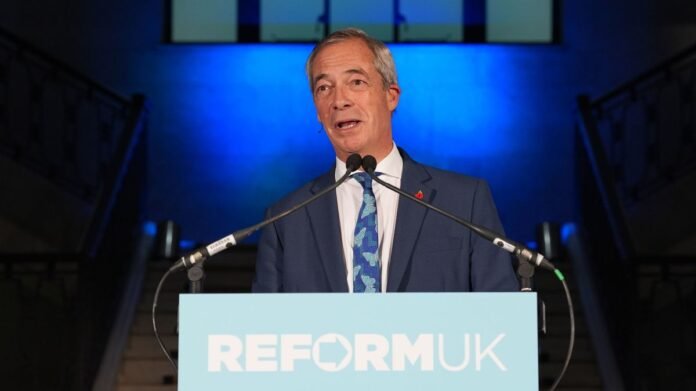
Nigel Farage, the leader of Reform UK, has faced criticism for his proposed deep cuts to public services and potential betrayal of pensioners. Critics have labeled Reform as “vultures” for their stance.
During a speech in the City of London, Farage abandoned tax pledges worth billions of pounds but emphasized his commitment to welfare cuts and reduced public spending if his party comes into power. He expressed dissatisfaction with the handling of Brexit opportunities, predicting economic turmoil that could lead to a general election in 2027.
Farage’s reluctance to guarantee the pensions triple lock and his proposal to lower the minimum wage for young workers have drawn further scrutiny. Additionally, his controversial plan to assist wealthy overseas tycoons in avoiding taxes has raised concerns among opponents.
Critics accused Farage of presenting an inconsistent budget that appears to favor hedge funds and financial speculators over ordinary workers. The Deputy Leader of the Liberal Democrats, Daisy Cooper, condemned Farage’s agenda as detrimental to pensioners and vowed to oppose Reform’s policies.
Farage acknowledged the challenges in implementing sweeping tax cuts, conceding that significant reductions are not currently feasible due to the country’s financial situation. He reiterated his intention to introduce the Britannia Card, which would allow wealthy foreign individuals to avoid taxes on overseas earnings and inheritance tax.
Moreover, Farage hinted at the possibility of reducing the minimum wage for young workers, citing the recent adjustments to National Insurance Contributions. Reform’s previous manifesto outlined ambitious tax cut plans, drawing criticism from economic analysts for being unrealistic.
In response to Farage’s proposals, various political figures expressed concerns about the potential impact of Reform’s policies on public services and the economy. The Trade Union Congress (TUC) criticized Farage’s austerity measures and warned of job losses and decreased standards in various sectors.
Farage defended his economic vision, emphasizing the importance of attracting high-earning individuals to the country to generate tax revenue. He predicted a future general election driven by economic challenges and reiterated his commitment to advocating for his party’s agenda.
Opposition parties, including Labour, condemned Farage’s plans, labeling them as detrimental to public services and the economy. The Shadow Chancellor of the Conservative Party criticized Reform’s economic strategy, describing it as chaotic and impractical for the country’s future.