
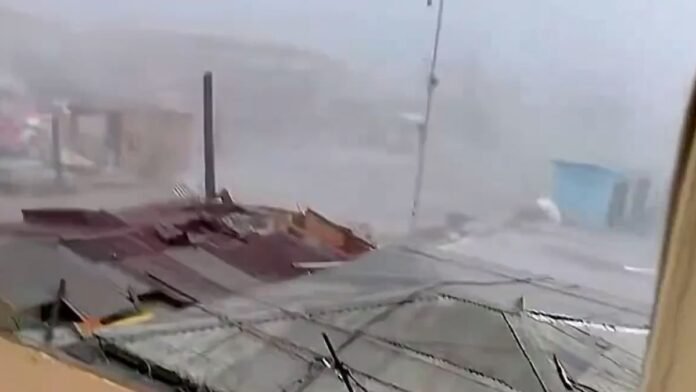
Terrifying recent footage displays the immense power of Hurricane Melissa as it pummels numerous residences in Jamaica with strong winds. Shared by Ground Force Humanitarian Aid on Facebook, the video has garnered over 911,000 views worldwide, showcasing one of the most potent storms in history hitting the island.
The video captures the relentless winds ravaging a coastal community, with hurricane gusts ripping through streets and propelling debris into the air. Footage also depicts vehicles and houses engulfed by floodwaters, while locals navigate through chest-deep storm surges amid the ongoing havoc.
Following the catastrophic weather event, Jamaican authorities have designated the region as a disaster zone, with emergency teams striving to rescue individuals stranded by the floods. The clip, posted on Tuesday, includes a chilling message from the aid group expressing their deployment of SAFE Camp equipment to establish a secure operational base.
Hurricane Melissa, entering from the Atlantic at speeds of 185mph, resulted in at least seven fatalities, destruction of homes, isolation of communities, and extensive flooding. Termed the “storm of the century,” it fell just 5mph short of the highest recorded speed in that ocean.
Prior to its landfall, the Jamaican government mandated evacuations from high-risk zones and shut down all airports, urging residents to seek shelter. The US National Hurricane Center cautioned about the potential for “total structural failure” due to the strong winds at the hurricane’s core.
Despite evacuation orders, officials are concerned that numerous individuals have disregarded warnings. Forecasters predict that Melissa, the most potent storm in the nation’s history, could inflict even greater damage as it heads towards Cuba. Nearly 900,000 residents in Cuba have been instructed to evacuate from eastern provinces, with the US Navy relocating non-essential personnel from Guantanamo Bay and repositioning warships out of the hurricane’s trajectory.
The United Nations World Food Programme has positioned 450 metric tons of emergency food supplies in neighboring Haiti, although this quantity falls short of the usual demand during such crises.