
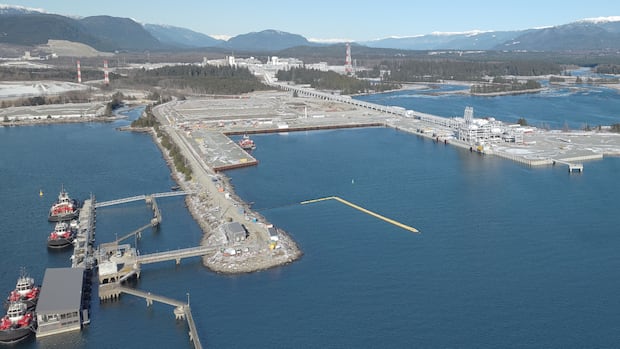
The firm responsible for a significant LNG export facility on the North Coast of British Columbia has received a $50,000 administrative fine concerning underwater noise during the construction of a tug terminal three years ago.
This tug terminal was included in Phase 1 of LNG Canada’s natural gas liquefaction and export facility located in Kitimat, which commenced operations last year.
The Environmental Assessment Office (EAO) of B.C. stated in a decision released on September 17 that LNG Canada (LNGC) violated its environmental assessment certificate while conducting pile-driving on several occasions during May and June of 2023.
In its ruling, the office determined that the company did not follow its marine mammal management and monitoring plan (MMP) adequately.
Findings indicated that LNG Canada did not sufficiently monitor underwater sound levels at the designated boundary of a marine mammal exclusion zone (MMEZ), did not employ multiple marine mammal observers during operations, and failed to utilize noise-dampening bubble curtains during all piling work — all stipulated requirements of its MMP.
The company contested these findings in its response to the EAO, claiming that its non-compliance was a procedural matter regarding whether it should have consulted with regulators prior to altering its monitoring plan.
LNG Canada stated it employed vibratory pile-driving instead of impact pile-driving to lessen underwater noise, arguing that this practice made the initially required 1.9-kilometre MMEZ unnecessary.
Additionally, it argued that it met the essence of its environmental certificate conditions by adopting an adaptive, risk-based monitoring strategy that effectively safeguarded marine life.
The company noted that subsequent hydroacoustic modeling confirmed a rapid decline in noise levels and no adverse effects on aquatic mammals.

The regulatory body dismissed these arguments, stating that the requirements outlined in the MMP were not open to interpretation or modification.
“Regardless of the reasonableness of LNGC’s interpretation, the approved Construction MMP remained applicable during the 2023 piling program and had not been modified or replaced,” it declared.
It further noted that the regulatory framework “did not obligate LNGC to implement monitoring and mitigation measures that it deemed sufficient or technically preferable.”
“It mandated LNGC to apply the approved MMP,” the ruling stated.
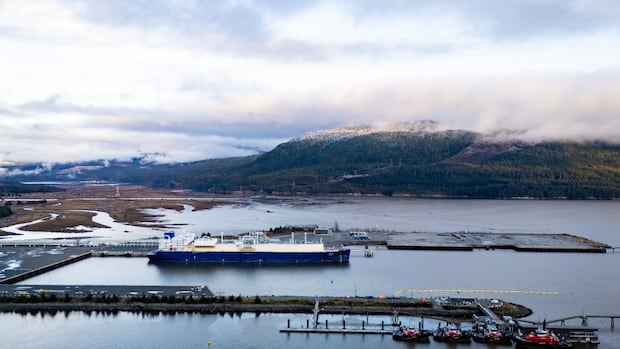
In a statement, a representative from LNG Canada mentioned that the company was reviewing the EAO’s final conclusion.
The spokesperson noted that the firm had taken “concrete steps” to rectify the issues highlighted in the decision, aiming to enhance monitoring and compliance — including the development of a revised marine monitoring plan that received provincial approval in 2025.
The federal government has designated LNG Canada as a project of national significance.
At the end of September, the company confirmed its intention to proceed with its $33-billion Phase 2 expansion, which will double the annual production capacity on site from 14 million to 28 million tonnes of LNG.
Tag: rewrite-pending