
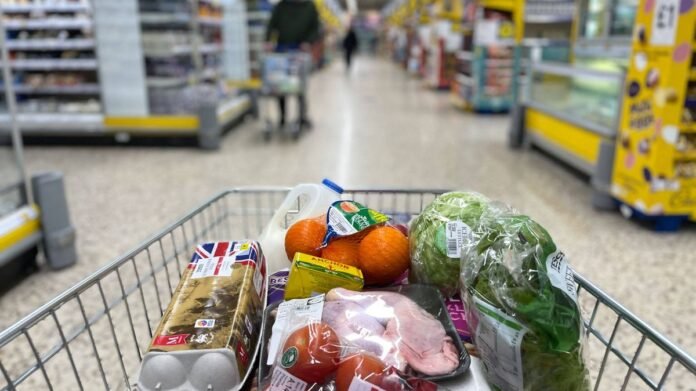
The ongoing crisis in the Middle East is projected to significantly increase the average family’s annual grocery expenses by more than £150, according to experts. The Institute of Grocery Distribution has revised its food inflation forecast for this year, anticipating a surge from 3.6% to over 8% by June.
This rise in prices is expected to further strain household budgets, with the cost of groceries already being a major expenditure for many families. The spike in food prices, which has escalated by approximately 38% since before the Covid pandemic, has already impacted consumers significantly.
Referred to as “Trumpflation” by critics, the current situation is attributed to the influence of US President Donald Trump and Israel’s conflict with Iran. The escalation of oil prices and the potential disruption of the Strait of Hormuz by Iran are likely to lead to increased food costs and higher expenses for ordinary individuals.
James Walton, the chief economist at the IGD, warned that the Middle East conflict could prolong the cost of living crisis. If the energy shock intensifies, food inflation could exceed 8% by June 2026, adding over £150 annually to the average household’s grocery bill. Despite concerns over excessive profits, Walton emphasized that margins for basic food and drink products remain slim, with some items generating minimal profits.
In March 2023, food inflation peaked at over 19% due to Russia’s invasion of Ukraine, but it has since declined to 3.6% in January this year, as reported by the Office for National Statistics. Looking ahead, the Iran war is anticipated to drive inflation higher, currently at 3%, due to rising energy costs. The Bank of England has forecasted that inflation could reach 3.5% in the coming months.
For timely news updates, make Daily Mirror your ‘Preferred Source’ on Google News.