
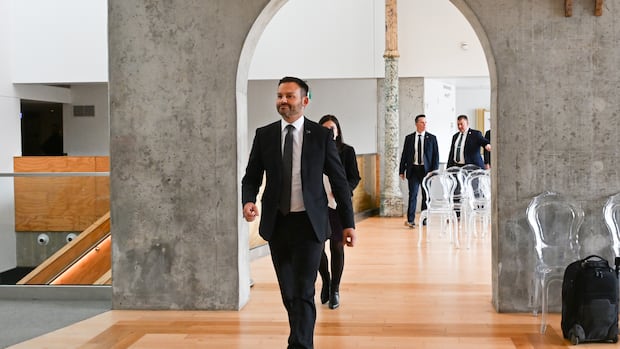
Before engaging in a long-promised referendum regarding independence, the newly designated Quebec premier, Paul St-Pierre Plamondon, has a more pressing agenda that largely concerns the federal government.
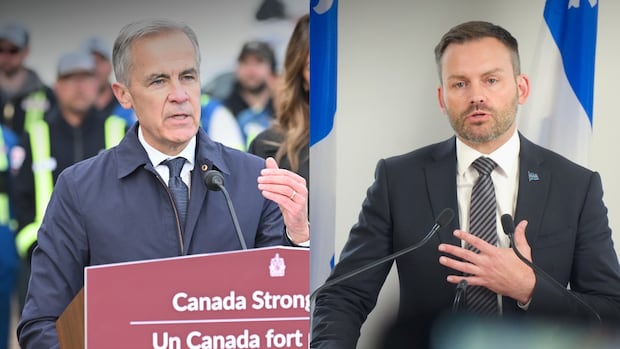
On Tuesday, the leader of the Parti Québécois stated his willingness to work alongside Prime Minister Mark Carney when it aligns with Quebec’s interests. He described their initial conversation as friendly, highlighting a mutual dedication to combating homelessness in the province.
However, seasoned political analysts believe that significant cooperation is improbable. In fact, the PQ benefits from illustrating that staying in Canada does not advantage Quebec.
“When one partner aims to demonstrate that collaboration is ineffective, it becomes challenging to work effectively together,” remarked former federal Liberal leader Stéphane Dion.
André Lecours, a political science professor at the University of Ottawa, indicated that there is “really no incentive” for the PQ to cooperate with Ottawa.
“In fact, friction and tension are desired,” Lecours commented during an interview.
Let’s examine some of these friction points.
How will the election of a Parti Québécois minority government affect Quebec’s relationship with Ottawa? CBC Radio’s The House host Catherine Cullen explains how the PQ could shake things up at the federal level.
Reducing immigration levels
The PQ aims to significantly lower the number of newcomers to the province. The party seeks to limit the number of permanent immigrants to 35,000, a notable decrease from the 60,000 anticipated this year.
Additionally, the party intends to halve the quotas for non-permanent immigration, aiming for a range between 200,000 and 250,000 individuals while safeguarding sectors like agriculture, manufacturing, and healthcare.
To realize this goal, the PQ will require assistance from Ottawa.
-
PQ in power, CAQ wiped off the map: Key takeaways from Quebec’s election
-
ANALYSIS
CAQ fatigue key to sovereignist PQ’s historic victory, fragile government
The federal government oversees the final approvals for permanent residency and issues visas for temporary foreign workers and international students. St-Pierre Plamondon seeks full control over these processes to be transferred to Quebec, a request that the federal government has previously denied.
“There’s nothing Ottawa can do to satisfy the PQ regarding immigration,” Lecours stated.

Prime Minister Mark Carney said he spoke with Quebec premier-designate Paul St-Pierre Plamondon the morning after his election win and ‘discussed the ways that we would work together.’ On the question of a future referendum on separation, Carney said it’s ‘not a time to wait for something a few years down the road; it’s a time to act.’
The future of high-speed rail
The PQ is against the federal government’s plan for a high-speed rail line linking Toronto, Montreal, and Quebec City.
Federal Transport Minister Steve MacKinnon has referred to the initiative as a means to “build a robust economy and create new opportunities for Canadians.”
The federal government intends to unveil this fall the initial stretch of the route, which will connect Ottawa to Montreal.
However, St-Pierre Plamondon has argued that the project fails to meet the requirements of Quebec residents.
Lecours believes that the high-speed rail initiative is unlikely to proceed under the PQ’s leadership, asserting that “there’s no chance the federal government will advance the project if the Quebec government opposes it.”
Legal challenges: Bill 21 and the Crown
The Supreme Court of Canada is anticipated to deliver a verdict by the year’s end regarding the potential annulment of Bill 21, the contentious provincial law that mandates certain public employees to remove head coverings and prohibits wearing religious symbols while on duty.
Lecours remarked that the decision concerning the use of the notwithstanding clause has the “potential to be explosive.”
Should the highest court in the country invalidate the law, the PQ is likely to leverage this setback as significant political ammunition, arguing that Quebec’s values can only be safeguarded through independence.
St-Pierre Plamondon also expressed intentions to “abolish” the monarchy in Quebec and to cut funding for the province’s lieutenant-governor’s office within the first 100 days of assuming office.
According to the Constitution Act, 1982, any changes to the roles of the King, the Governor General, or the lieutenant-governor require approval from the House of Commons, the Senate, and all ten provincial legislatures.
Experts are skeptical about whether this plan is feasible, but it is likely to incite conflict. Depending on the extent of the PQ’s actions, it could result in prolonged legal battles and disputes with Ottawa.

It’s a remarkable political comeback for a party that was on the brink of extinction after the last election. But the Parti Québécois fell short of a majority, and has been elected with the lowest share of the popular vote in Canadian history.
Requesting $4.4B more in federal transfers
The PQ’s five-year financial strategy includes a demand for an additional $4.4 billion in federal transfers from Ottawa.
The party seeks increased Canada Health Transfer payments and reimbursement for expenses related to asylum seekers. It will also advocate for enhanced control over its economy.
While St-Pierre Plamondon addresses these priorities, he will be overseeing a delicate minority government.
According to Dion, the PQ leader risks alienating constituents if he comes across as overly confrontational, especially when targeting a prime minister who enjoys popularity in Quebec.
“Finding a way to assert that we need to separate from Canada for our own benefit, without causing offense, will be a challenging task for him,” noted Dion, who played a key role in crafting Canada’s Clarity Act, which outlines the procedures for a province seeking to secede.
On Tuesday, Carney extended his congratulations to St-Pierre Plamondon for his victory, stating they had already discussed “how to collaborate for the benefit of Quebecers.”
When queried about the possibility of a sovereignty referendum, the prime minister stated his responsibility is to engage with all provincial administrations.
“Time is of the essence,” Carney emphasized. “We must foster a strong Quebec within a strong Canada.”