

The trade conflict between Canada and the U.S. has altered Canadians’ perception of their nation, somewhat revitalized national unity, and has been a significant factor in federal and provincial elections.
For over a year, this issue has permeated the national consciousness, and just when a resolution seemed imminent with our historically friendly southern neighbor, we are confronted with a new — more severe — wave of tariffs, bans, and counter-tariffs.
On September 8, Canada initiated a new series of retaliatory tariffs on U.S. imports after the United States imposed a 50 percent tariff on $27.6 billion worth of Canadian exports. Subsequently, the U.S. implemented bans on certain Canadian imports, including various alcoholic beverages, dairy products, molasses, and motorcycles, among others, late last month.
What impact could the latest developments in this dispute have on the Canadian economy? Might the urgent need to adapt lead us to diversify our trade partners more swiftly? And which products, if any, could become harder to obtain?
To explore these questions, CBC News consulted four experts in supply chains and retail to discuss potential price increases and how consumer behavior may need to adapt in the coming months.
They noted that the escalation between the two nations last month — which included the U.S. raising tariffs after the failure to finalize a new trade agreement, followed by Canada’s counter-tariffs and the U.S. implementing comprehensive bans — may be felt more through price increases, reduced options, and extended wait times for certain items rather than through empty store shelves.
“Most products should still be available, although some brands, models, or specifications might disappear from the marketplace,” stated Xiaodon Pan, an associate professor in supply chain and business technology management at Concordia University in Montreal.
-
Trump says ‘very bad’ Canada is being ‘taught a little lesson’ as trade action escalates
-
Canada scores a dairy win on U.S. soil as farmers grumble about Trump’s trade war
-
The incoming U.S. import bans on Canadian alcohol, whey, molasses and motorcycles, by the numbers
The counter-tariffs are designed to target products for which Canadian alternatives are accessible, and range from 15 to 25 to 50 percent.
These tariffs affect sectors such as steel and aluminum, dairy, appliances, agricultural machinery, pulp and paper, plastics, and electronics — encompassing finished goods and certain components used in the production of other items. Tariffs on American automobiles remain in effect as well.
A study from North Carolina indicated that toilet paper in the U.S. may become “more costly, less soft” due to President Donald Trump’s 50 percent tariff on northern bleached softwood kraft imported from Canada.

Canada’s economy has shown resilience in the face of punishing U.S. tariffs, but new import bans on a range of Canadian products are creating further drag. Accounting firm Deloitte has lowered its growth forecast for next year by 20 percent.
‘Prices are going up,’ business prof says
Domestically, Matt Poirier from the Retail Council of Canada noted that shopkeepers began to increase their stock as soon as they were aware of impending tariffs following the breakdown of the trade agreement between Canada and the U.S. in August. The current inventory should help prevent significant price hikes for at least a few months, he mentioned.
“Retailers have been working diligently to find alternate sources, whether domestic or international,” Poirier explained. “However, it takes time for supply chains to adjust.”
While the impact of the tariffs might take time to manifest, they could still be substantial once current inventories are depleted by year’s end.
Fraser Johnson, a professor at Ivey Business School at Western University in London, Ontario, indicated that retailers may avoid shocking consumers and potentially losing sales in the short term, but “over the medium to long term, prices will rise.”
Johnson elaborated that even though alternatives to U.S. products may exist elsewhere, the increased costs of U.S. goods will ultimately compel businesses to raise prices on products sourced from other countries as well.
Pan, from Concordia University, concurs. She pointed out that while items like clothing and cosmetics may have more global alternatives, consumers are likely to experience “higher prices and reduced brands, styles, and shades” in those categories.
Experts suggested that outdoor gear enthusiasts might encounter similar trends. Caution is advised, gorpcore.
Appliances and electronics
Whether it’s Maytag, GE, Frigidaire, or premium Wolf stoves, American companies hold a substantial portion of the North American appliance market — but this could shift in Canada shortly.
A new 25 percent surtax has been placed on imported U.S. refrigerators, freezers, cooking ranges, washer and dryer units, and dishwasher components.
While numerous South Korean and Chinese alternatives are already available, prices for these products may also rise as retailers attempt to recover costs, as Johnson noted.
For individuals with existing American-brand appliances, sourcing parts could become complicated.
“Specific components such as control boards, pumps, or sensors may have very limited direct alternatives,” Pan of Concordia University remarked.
She indicated that similar issues could arise with electronics and furniture.
What about shortages?
Construction materials represent an area of greater concern.
Canada imports many of these materials from the U.S. — including metals, plastics and foam, paints, coatings, adhesives, cement, and types of prefabricated wood. Their bulkiness makes transportation across the shared border straightforward.
This is one sector that could face shortages, according to Saibal Ray, the James McGill Chair professor for supply chain management at McGill University in Montreal.
Car parts might also be affected due to tariffs on steel and aluminum, Ray mentioned, as “availability could become a concern.”
Johnson concurs, advising that “if you’re considering a major purchase or undergoing home renovations, securing your prices sooner rather than later is a wise strategy.”
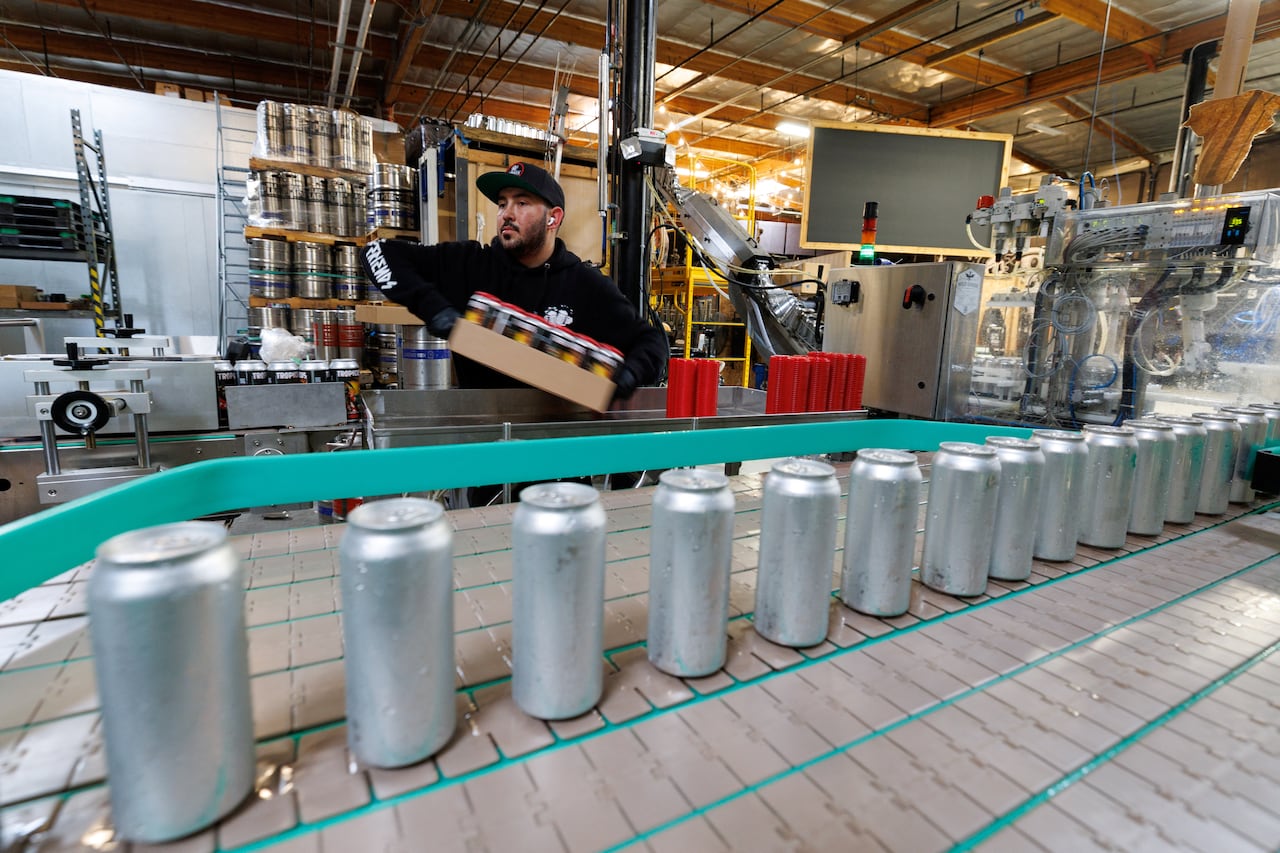
Aluminum cans are shown after being filled with craft beer during a production run at Black Plague Brewery in Oceanside, Calif., last year. (Mike Blake/Reuters)
Again, it’s not only finished products that are impacted. Raw materials may cross the border multiple times before they are transformed into items like car components or food containers, as Pan highlighted.
She cited aluminum cans used for beverages. Canada supplies much of the aluminum for these products, but the actual manufacturing often occurs in the U.S.
“As these capabilities take time to establish, tariffs can increase costs well before the underlying interdependence shifts,” Pan noted. She pointed out that costs are not the only concern; regulations also pose challenges to diversifying trade partners.
Elevators serve as another illustration of Canada-U.S. interdependence. There are North American “product standards, technical specifications, testing, and certification,” but if the European Union aligns more closely with these standards, it would facilitate European producers’ ability to sell to Canada.
Similarly, Johnson remarked that “business-to-business” expenses will increase before they reach consumers, but all of this has a cascading effect, making it difficult to predict when these additional costs will impact the bottom line due to the unpredictable nature of trade disputes.
“Ultimately, all trade wars conclude,” he noted, emphasizing that the ongoing uncertainty is currently affecting small to medium-sized Canadian businesses.
“I can’t say when, but I am confident that this will eventually be resolved and we will be able to … move forward with our lives.”
Is there a ‘silver lining’ in food prices?
Experts indicated that it is more challenging to stockpile or secure prices for food, particularly seasonal produce. Moreover, it’s not just the trade conflict driving up costs, but soaring oil prices resulting from the U.S.’s conflict with Iran.
However, produce is not included in the latest series of U.S. tariffs and Canadian counter-tariffs.
The U.S. has outright banned Canadian alcohol, dairy, and whey items, along with molasses and sugar processing materials, after Canada retaliated against U.S. tariffs in August, imposing 50 percent tariffs on these products, but ensured not to apply surtaxes on items that are not currently available from Canadian producers.
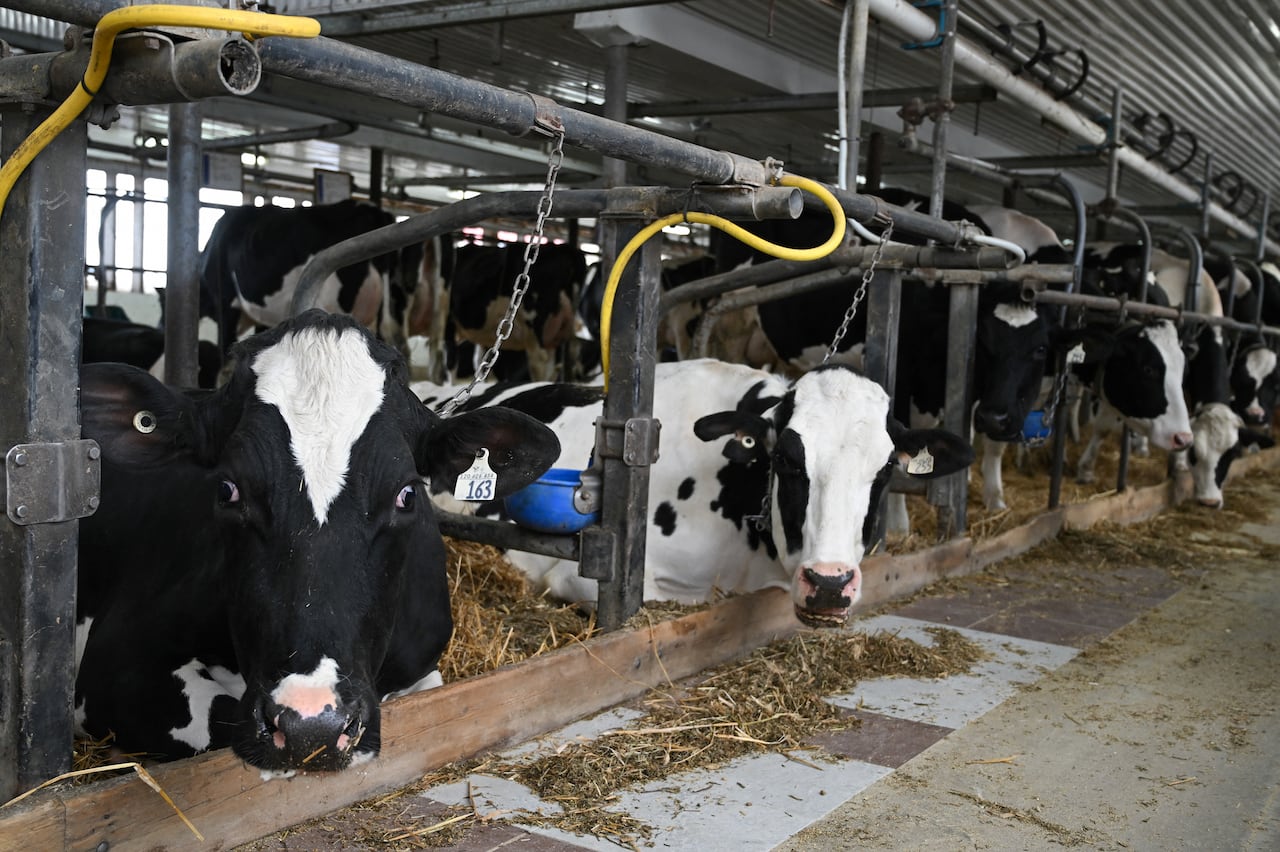
Holstein cows at a dairy farm in Saint-Blaise-sur-Richelieu, Que. (Graham Hughes/Reuters)
Gary Sands, the senior vice president of policy and advocacy for the Canadian Federation of Independent Grocers, expressed confidence that Canadian food suppliers will successfully replace U.S. products with domestic options.
“There’s a silver lining to this,” Sands stated, adding that he anticipates an even greater boost for Canadian products and suppliers as a result of the recent tariffs.
Members of CFIG have already reported approximately a 20 percent increase in consumers choosing Canadian products, according to him.
“In my 26 years here, I’ve never witnessed anything like this. It’s definitely a permanent trend,” Sands noted.
Thus, while consumers may notice shifts in the retail landscape over the upcoming months, with changes in brands and specific models, it is possible that this could further reduce Canada’s dependence on U.S. goods, according to Pan and Ray.
“The broader lesson is that deep integration creates both efficiency and mutual vulnerability,” Pan concluded.