
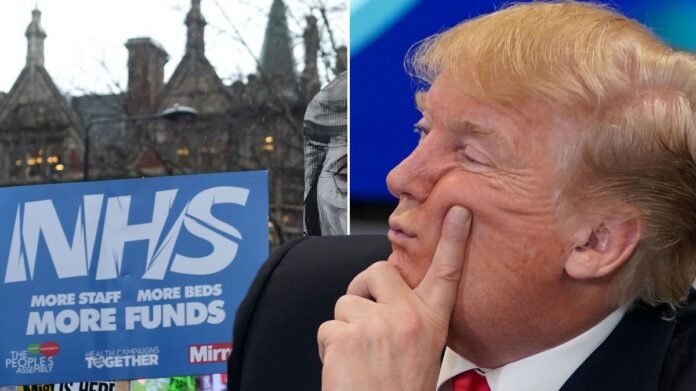
Health leaders have issued a warning that Donald Trump’s push for the NHS to increase spending on medicines could lead to job losses and longer patient wait times. The NHS Confederation and NHS Providers have expressed concerns that the current budget does not account for the costs of covering redundancies, potential strikes, and higher medicine prices. Labour’s NHS recovery efforts are at risk due to ongoing negotiations for a US trade deal that may require the NHS to pay significantly more for drugs.
A proposed 25% increase in drug “value for money” thresholds could create a significant deficit in the NHS budget, resulting in delayed patient treatments. Trump’s threats of imposing tariffs on drug imports from UK firms if higher prices are not paid have already impacted pharmaceutical investments in the UK.
NHS leaders estimate that a potential deal with the US could cost the NHS around £1.5 billion, further straining the already stretched budget. This financial pressure, combined with other unfunded commitments, could result in a funding shortfall of up to £3 billion, leading to extended patient wait times and possible service cuts.
The looming financial challenges have forced NHS trusts to consider cost-saving measures, including potential staff redundancies and stricter limitations on certain medical procedures. With the NHS recovery hanging in the balance, Chancellor Rachel Reeves is set to announce tax and spending commitments in the upcoming autumn budget.
Despite the government’s significant investments in the NHS, including funds for digital transformation and urgent repairs, health leaders emphasize the need for additional support to address the current funding gaps. NHS data shows a stagnation in addressing the backlog of routine hospital treatments, highlighting the urgent need for financial stability and reform to sustain the healthcare system’s progress.