
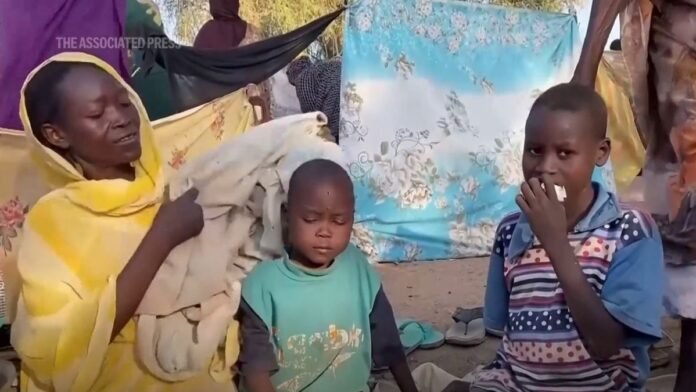
Yvette Cooper has emphasized the global failure to recognize the critical nature of the humanitarian crisis unfolding in Sudan, with distressing accounts emerging of widespread killings, starvation, and the use of rape as a tool of warfare.
The Foreign Secretary strongly denounced the appalling events in the Darfur region following the takeover of el-Fasher by the paramilitary Rapid Support Forces (RSF). The Foreign Office reported that approximately 260,000 individuals, half of whom are children, are trapped in conditions resembling a famine, isolated from aid and exposed to lethal violence.
During a summit in Bahrain, Ms. Cooper, together with foreign ministers from Germany and Jordan, urged for an immediate ceasefire in the ongoing civil conflict between the RSF and the Sudanese military which began in 2023.
In a post-summit interview with the Sunday Mirror, Ms. Cooper highlighted the need for world leaders to prioritize resolving the conflict in Sudan with the same vigor as seen in Gaza. She stressed the alarming scale of the humanitarian crisis affecting around 8 million people, equivalent to the population of London, yet lamented the lack of urgency in response.
Ms. Cooper underscored the atrocities resulting from RSF advancements in el-Fasher, where 130,000 children remain trapped amidst reports of executions at a maternity hospital and the abhorrent use of sexual violence as a weapon of war. She called for renewed efforts to secure a ceasefire, provide humanitarian aid, protect civilians, and safeguard women and girls from such brutal violence.
Yesterday, Ms. Cooper announced a £5 million pledge from the UK for emergency assistance, including provisions for food and medical supplies, with a specific allocation of £2 million to aid survivors of sexual violence.
The Foreign Secretary also expressed concern over the regression in protecting women in conflict situations since the passage of a UN resolution 25 years ago. She emphasized the importance of refocusing efforts on combating violence against women and girls within conflicts and international cooperation, as well as in foreign policy, harking back to the impactful work of Angelina Jolie and William Hague in addressing rape as a weapon of war and supporting survivors.