
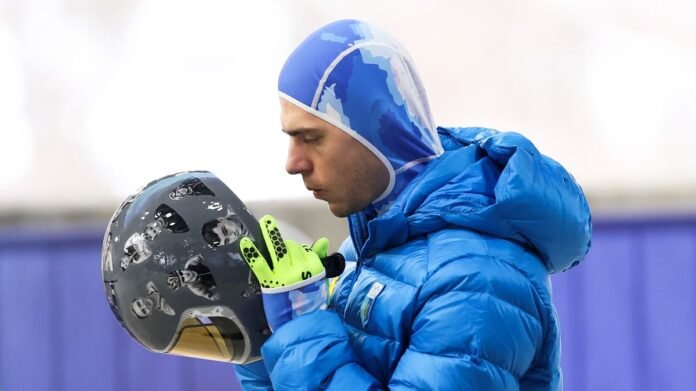
Ukraine’s Vladyslav Heraskevych has been barred from competing in the Winter Olympics by the International Olympic Committee (IOC) for his insistence on wearing a helmet adorned with images of 24 deceased Ukrainian athletes who lost their lives due to Russia’s invasion. Heraskevych, a skeleton pilot, brought the helmet to Milano Cortina but was denied permission to use it.
Despite being informed that the helmet was not permitted, the 27-year-old defiantly wore it during a training session. Following unsuccessful pleas to the IOC to reconsider, Heraskevych was disqualified and had his Olympics accreditation revoked, citing the helmet as a political statement.
Expressing his refusal to compete without the helmet, Heraskevych plans to appeal the decision at the Court of Arbitration for Sport, emphasizing the importance of honoring the fallen athletes. His father and coach, Mykhailo, visibly distraught upon hearing the news, was present at the venue.
The IOC’s statement highlighted Heraskevych’s failure to comply with their guidelines on athlete expression, despite efforts to find a compromise. Discussions between Heraskevych and IOC president Kirsty Coventry failed to resolve the issue, leading to the ultimate disqualification.
Coventry, a Zimbabwean politician, personally engaged with Heraskevych in Cortina, acknowledging the powerful message behind the helmet while lamenting the inability to find a solution that would allow the athlete to compete.
With the competition looming, Heraskevych demanded the ban be lifted and an apology from the IOC, denouncing the perceived discrimination in the rules interpretation. The IOC, however, stood firm on their decision, stating that mourning is subjective and not universally understood.
The dispute surrounding the helmet has drawn attention away from the sporting events and athletes themselves, turning into a prominent issue at the Winter Olympics.