
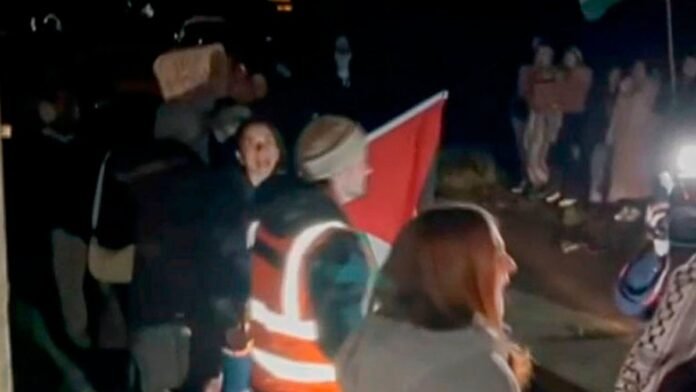
Protests outside the residences of public officials are on the brink of being banned, carrying a potential penalty of up to six months in jail upon conviction. A new legislation is being introduced to enhance protections against harassment and intimidation for Members of Parliament (MPs), peers, and councillors. A recent survey revealed that 96% of MPs had encountered incidents that hindered their ability to fulfill their duties.
The upcoming law will make it a criminal offense to demonstrate outside the home of a public figure with the intent to exert influence. Security Minister Dan Jarvis emphasized that such actions “cross a line” and can deter individuals from engaging in electoral processes. Jarvis expressed concern over the alarming levels of abuse faced by those involved in British politics, stating that it poses a significant threat to democracy. He emphasized the importance of creating a safe environment for political participation without the fear of personal or family safety being compromised.
The prohibition will not extend to official residences like Downing Street and Chequers. This measure is being included in the Crime and Policing Bill to combat negative behaviors in the political sphere. According to the Electoral Commission, more than half of candidates in the recent general election experienced some form of abuse or intimidation.
Notably, a study overseen by Commons Speaker Sir Lindsay Hoyle discovered that 96% of MPs had encountered incidents impacting their job performance negatively. Will Fletcher, acting head of the Jo Cox Foundation, cautioned against protesting at individuals’ homes, highlighting the safety risks and distress it can cause to the targeted individual and their family. Fletcher stressed the importance of maintaining respectful protest and robust debate within democratic boundaries.
Samantha Dixon, Minister for Democracy, condemned all forms of intimidation and abuse towards public officials, asserting the need to safeguard individuals in public office to encourage greater participation in democratic processes. Various politicians, including Keir Starmer, have faced demonstrations at their family residences. Former Tory MP Tobias Ellwood, who also experienced such protests, expressed concerns over the escalating lack of civility in public discourse and the potential harm caused by aggressive actions at MPs’ homes.
In conclusion, the move to outlaw protests outside politicians’ homes aims to protect public officials and their families from intimidation and ensure a more conducive environment for political engagement.