
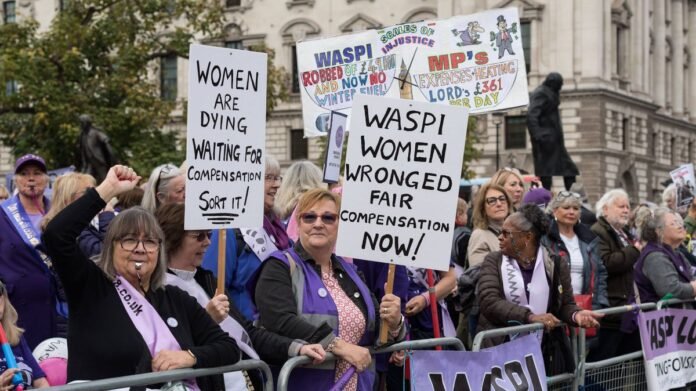
The Government has decided to review its stance on compensating women born in the 1950s who were impacted by changes to the state pension age following the emergence of new evidence.
Pat McFadden, the Secretary for Work and Pensions, revealed that undisclosed evidence from 2007 had surfaced, which was not previously considered when compensation was denied to WASPI women under the previous administration.
While this development does not guarantee compensation for WASPI women, campaigners assert that approximately 3.6 million women were inadequately informed about the increase in the retirement age from 60 to 65, aligning it with men.
An estimated 394,000 affected women have passed away since calls for compensation began in 2015. The WASPI campaigners had initiated a judicial review scheduled for the High Court next month, but the Government has opted to reassess the evidence and withdrawn from the process.
During a statement in the Commons, Mr. McFadden emphasized a commitment to a fair and transparent approach, indicating that the review does not automatically imply financial redress for the affected women.
No specific timeline has been provided for the review process, potentially causing further delays for those impacted. This decision follows the recommendation in March 2024 by the Parliamentary and Health Service Ombudsman for compensation ranging from £1,000 to £2,950 per individual affected.
In December, the former Work and Pensions Secretary, Ms. Kendall, apologized for a significant delay in notifying those affected by the pension age changes but disagreed with the Ombudsman’s proposal for payouts, citing concerns over the substantial compensation costs.
Advocates argue that the affected women were unjustly treated and left without adequate retirement planning. Angela Madden, Chair of Women Against State Pension Inequality (WASPI), expressed optimism at the government’s reassessment, highlighting the prolonged struggle for compensation.
Numerous Labour MPs, including Keir Starmer and Rachel Reeves, openly supported the WASPI cause while in opposition. The Labour Party had pledged compensation for WASPI women in their 2017 and 2019 manifestos under Jeremy Corbyn’s leadership, although this commitment was not reiterated in the most recent election manifesto.