
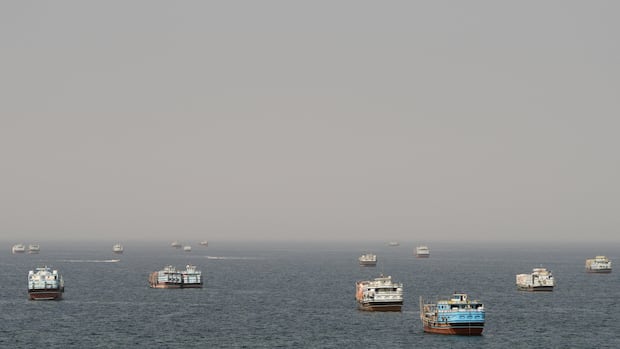
Tehran reported on Thursday that seven oil tankers were either set ablaze or damaged in the Strait of Hormuz overnight, allegedly due to Iranian strikes or naval mines. This number represents a significant escalation as fears grow regarding the potential for a full-scale war.
Claims regarding the recent assaults on vessels were aired by Iranian state television, though The Associated Press has not been able to independently verify these reports. The Islamic Revolutionary Guard Corps navy was cited in the report, reiterating threats to target U.S. military facilities in the region if America continues to assist in navigating commercial vessels through the strait.
The report did not provide details about casualties. Iran reasserted its dominance over the waterway shortly after the U.S. and Israel initiated extensive attacks on Iranian territory on February 28.
According to a British military monitoring group, the United Kingdom Maritime Trade Operations, October has witnessed the highest number of reported incidents involving commercial shipping since the conflict began in March. While UKMTO did not document the latest incidents, it has observed a growing hesitation among some shipping companies to report such occurrences.
Experts indicate that oil producers have found ways to maintain crude oil output, albeit at an increasing expense.
Additionally, with a crucial election in Israel approaching—where Prime Minister Benjamin Netanyahu may face a loss—and the impending U.S. midterm elections, where rising fuel prices linked to the war have incited voter frustration, there are apprehensions that U.S.-Israeli attacks on Iran might resume.
“Netanyahu is intent on attacking Iran, that’s undisputed,” stated Danny Citrinowicz, a researcher at Israel’s Institute for National Security Studies and a former Iran expert within Israel’s military and intelligence sectors, in comments to the AP. He predicted that a decisive Netanyahu win in the October 27 election would almost guarantee an attack.
WATCH | What’s driving up diesel prices:
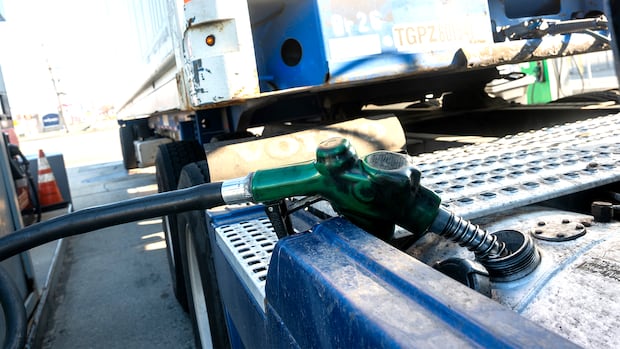
Why are diesel prices soaring despite a gradual recovery in crude oil exports through the Strait of Hormuz? Eli Glasner from The National explains the factors behind the surge and why prices are unlikely to decline soon.
A resurgence of active conflict would once again put civilians at risk throughout the region and complicate international shipments of oil, natural gas, and related products like fertilizers, likely resulting in another increase in prices.
An American maritime blockade initiated in April, coupled with trade sanctions, has severely limited Iran’s oil export revenues and intensified its domestic economic challenges. Although Tehran has recently concealed shipments of liquefied petroleum gas and jet fuel off the coast of Oman, as per multiple sources from Reuters, these volumes are a mere fraction of its former energy exports.
Furthermore, the United States is deploying additional military resources to the area, including a third aircraft carrier and thousands of troops, contributing to the largest accumulation of American warships and aircraft in the Middle East in decades.

Houthi threat escalates after previous negotiations
The recent spike in hostilities has expanded the scope of the conflict, particularly between Iranian-supported Houthis in Yemen and Saudi Arabia. The Saudi kingdom is allied with a coalition supporting Yemen’s internationally recognized government in its fight against the rebels.
On Thursday, the Saudi-led coalition declared it had intercepted drones over Riyadh and the holy city of Medina.
WATCH | Saudi defenses fail against Houthi rebels:
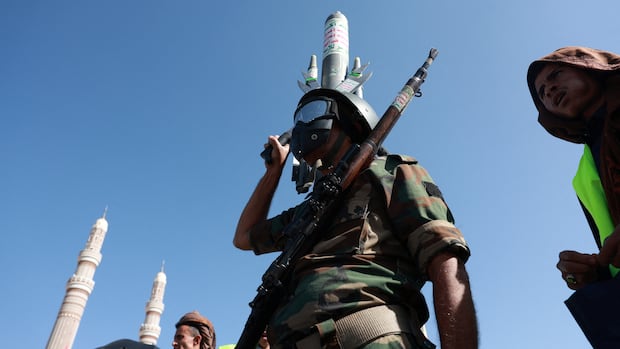
Stay updated with the latest on CBCNews.ca, the CBC News App, and CBC News Network for breaking news and analysis.
On Thursday, the Houthis claimed they had targeted the Defence Ministry in Riyadh, Saudi Aramco facilities in Yanbu, and King Fahd International Airport in Dammam, where Saudi officials reported two fatalities.
There was no immediate confirmation from Saudi sources regarding the attacks in Riyadh and Yanbu.
The Houthis’ ongoing lethal strikes on airports and other infrastructures within Saudi Arabia have increased pressure on the U.S. ally, which has requested military assistance.
On Wednesday, U.S. officials informed Reuters that the State Department had ordered some diplomats and their families to leave its missions in Saudi Arabia and planned to withdraw family members from several other U.S. missions in the region.
State Department spokesperson Tommy Pigott announced on X that the department had instructed the departure of “non-emergency U.S. government employees and their family members in Saudi Arabia only” due to Houthi strikes on civilian targets in the country.
WATCH | Trump turns down Iran’s ceasefire proposal:
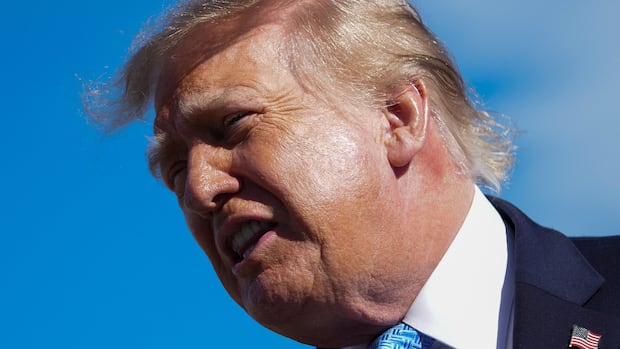
U.S. President Donald Trump rejected an Iranian ceasefire proposal that would have reopened the Strait of Hormuz, but Tehran claims that Washington has not officially declined the offer, keeping the possibility of negotiations open.
According to six individuals familiar with the situation, Saudi state oil company Aramco has mandated the evacuation of its headquarters in Dhahran and advised employees to work from home whenever feasible, following recent attacks that damaged its offices. Aramco has not issued any statements regarding this directive.
In the meantime, mediators are attempting to facilitate a return to negotiations between Washington and Tehran.
Iran’s Foreign Affairs Minister Abbas Araghchi stated on Wednesday that Tehran remains cautious but is open to diplomatic efforts while being prepared to defend itself.
Tehran continues to advocate its latest proposal, which would conclude the conflict and fully reopen the strait within a week, contingent upon the U.S. fulfilling several requirements. These stipulations, which include lifting the American blockade on Iranian ports, mirror those in a deal that collapsed shortly after both parties signed it in June.