
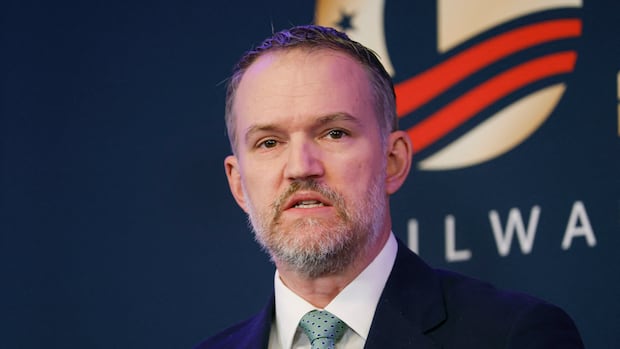
Jamieson Greer, the U.S. Trade Representative, has stated that he often engages in discussions with his Canadian counterpart; however, the two nations have encountered a stalemate concerning certain trade issues, and indications suggest that a resolution is not forthcoming in the near future.
During a press briefing at the G20 trade ministers’ meeting in Milwaukee, Greer expressed a lack of optimism regarding the likelihood of reaching an agreement with Canada. He noted that while “technical negotiations” continue among trade specialists from both countries, there are significant fundamental disagreements to address.
“There are several unresolved issues that are quite challenging to negotiate,” Greer remarked.
He also mentioned that the Trump administration’s strategy of levying tariffs on imported goods aimed at revitalizing American manufacturing is a broad approach and not specifically targeted at any single nation.
On the other hand, Canada argues that imposing heavy tariffs on industrial goods such as steel, aluminum, and automobiles is unreasonable considering the deep integration of the two economies developed over decades of free trade.
The Canadian federal government has forcefully opposed U.S. tariffs that threaten to undermine these crucial sectors, claiming such actions are inappropriate for a nation that is deemed an ally. Additionally, Canada remains the largest buyer of American goods, importing more than any other country.
U.S. losing manufacturing jobs
Nonetheless, Greer indicated that Canada and other nations perceive the United States as “a dumping ground” for their products, while the U.S. aims to enhance its domestic production. He stressed that these measures should not be interpreted as “threats directed solely at Canada.”
Despite Greer’s assertion that tariff policies are aiding industrial job growth, data from the U.S. Bureau of Labor Statistics, as compiled by the Economic Policy Institute, reveals that approximately 62,000 manufacturing jobs have been lost since Trump began his second term in January 2025.
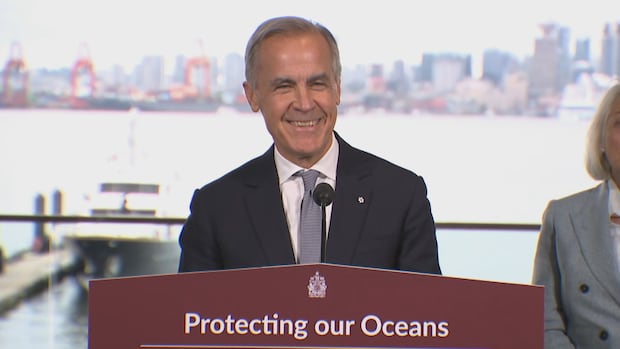
In response to a question from CBC News regarding U.S. President Donald Trump’s statement on Monday that Canada will soon apologize to secure a trade agreement, Prime Minister Mark Carney declared that Canada is “prepared to negotiate in good faith” for a deal that “respects the sovereignty of both nations.”
International Trade Minister Maninder Sidhu, who oversees trade with countries other than the U.S., met with Greer during his visit to Wisconsin.
Their discussion primarily revolved around broader global trade concerns, such as the elimination of forced labor and the issue of countries like China dumping heavily subsidized goods into market economies.
However, Sidhu noted that the Canada-U.S. trade dispute was also addressed in his interview with CBC News.
He emphasized to Greer the necessity for both nations to “find a collaborative approach, particularly for the benefit of our auto supply workers.”
“I believe there is enthusiasm from both parties,” Sidhu remarked, describing their exchange as “very cordial.”
“We are seeking a favorable deal,” he asserted. “We will not settle for anything less.”
Greer downplays Trump’s deal comments
In a prior conversation with Bloomberg News during the summit, Greer appeared to downplay President Donald Trump’s recent comments suggesting that Canada would soon seek a trade deal and that a resolution could be achieved within a month.
“You’ve heard the president’s remarks. He recently mentioned, ‘We might have a deal with Canada in a few weeks.’ I would like to emphasize the ‘might’ in that statement,” Greer said.
Greer reiterated that the U.S. remains open to reaching an agreement with Canada, but he indicated that Prime Minister Mark Carney and his team might not be willing to accept the offers on the table from the Americans.
“The issue is whether Canada is inclined to reach an agreement on some of these points. Our trade policy does not favor zero tariffs, as we aim to bring production back to the U.S.,” he explained. “Discrepancies still exist between Canada and the U.S.”
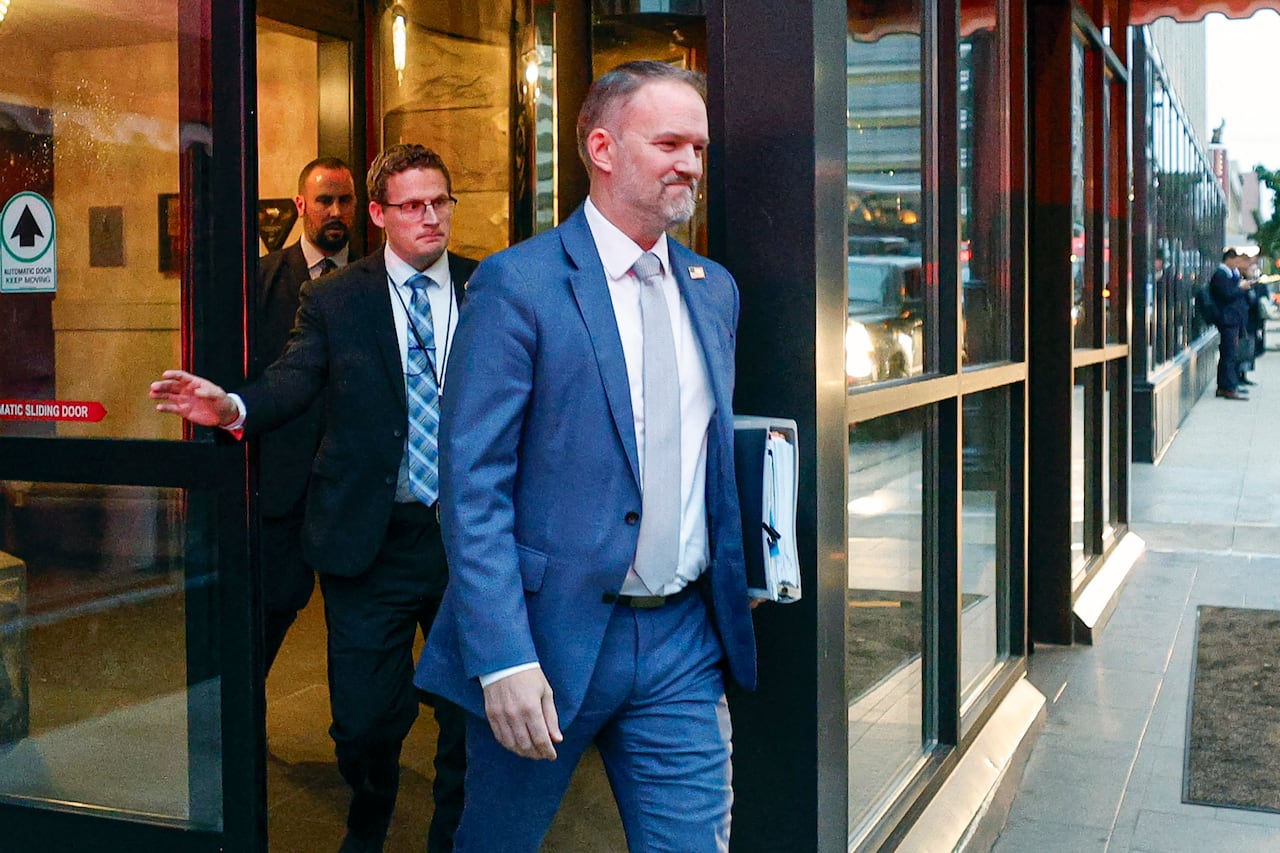
Greer is seen on the first day of the G20 Trade Ministerial Conference in Milwaukee on Wednesday. (Kamil Krzacysnki/Getty Images)
These “discrepancies” became evident when Canada-U.S. trade negotiations broke down in August, with Carney withdrawing his negotiators from Washington after what he characterized as a series of last-minute changes proposed by the Americans that were unworkable for Canada.
Canada expressed concerns regarding U.S. tariffs on medium- and heavy-duty trucks, which could undermine the competitiveness of a GM plant in Oshawa, Ontario, producing Chevrolet Silverados and jeopardize the planned production of Ford F-250s in Oakville, Ontario.
-
Carney says trade deal became untenable when U.S. ‘asked too much and offered too little’
-
Video
Carney outlines the last-minute changes U.S. tacked onto trade deal terms
Carney further stated that he could not agree to language in the proposed agreement that might compromise Canada’s sovereignty, specifically provisions that he claimed would limit the government’s capacity to forge trade agreements with other nations.
The U.S. opposition to Canadian initiatives aimed at enhancing the “discoverability” of French-language content on streaming platforms has also been a contentious topic, as Carney has pointed out.
While Greer seemingly appeared to soften U.S. demands regarding French-language content during an interview with CBC News, no notable progress has been made on these other issues since the bilateral discussions collapsed.
Carney mentioned this week that he believes a “mutually beneficial trade arrangement” with the U.S. could be achievable in the future.
“Canada is prepared to negotiate in good faith,” he affirmed.