
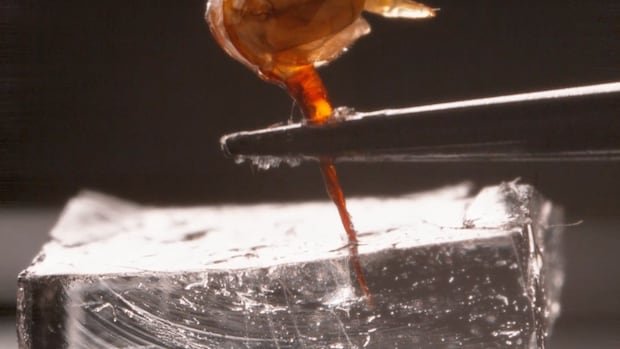
A western honey bee’s stinger is a final defense mechanism, typically leading to the bee’s demise as it embeds itself and delivers venom. Recent research in the Proceedings of the National Academy of Sciences sheds light on the effectiveness of this mechanism. Fiorella Ramirez Esquivel, a postdoctoral researcher at Macquarie University, highlighted the novelty of capturing bee stinger action with modern cameras.
The study utilized high-speed cameras to capture the rapid bee stinging process, revealing the intricate structures of the venom sac and stinger. Live honey bees were used in the experiments, with their stingers removed and the bees euthanized shortly after. The time-sensitive nature of the stinger’s activity post-separation required swift and precise actions.
The research unveiled a double-piston design in the bee’s stinger, where specialized valves facilitate both deeper penetration and continuous venom delivery. This mechanism, akin to a complex engine, involves intricate movements of the valves for optimal venom flow. The study’s findings have implications beyond bee biology, potentially extending to medical applications.
Notably, the stinging behavior of western honey bees serves as a sacrificial defense for the larger colony, reflecting the superorganism concept of bee colonies. The study also explores the evolutionary significance of the bee’s autotomy defense strategy. Additionally, the study reflects on the historical significance of honey bees and their intricate stinging apparatus in human society.
The detailed insights into bee stinging mechanisms raise questions about other bee species and their unique adaptations. The continuous flow of venom facilitated by the bee’s stinger structure presents intriguing possibilities for further research into bee biology and potential applications beyond the natural world.