
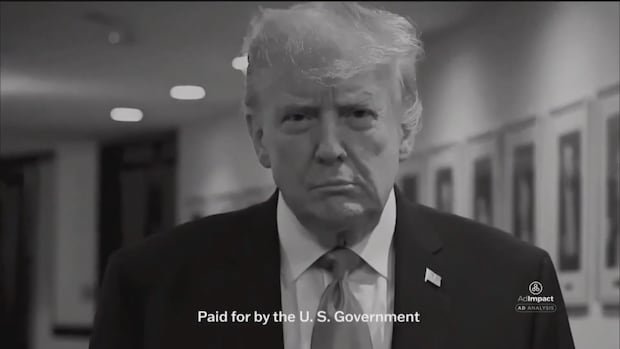
The White House is currently running TV ads featuring President Donald Trump ahead of the upcoming crucial midterm elections, funded by taxpayer dollars. These ads have been broadcast during prime time on both national and local television, including slots during recent NFL games. The total cost of the ad campaign has reached at least $1.4 million US, as reported by AdImpact, an advertising tracking firm.
This move by the White House to utilize public funds for these ads has sparked criticism from various quarters, including Republicans. Senate Majority Leader John Thune expressed disapproval, stating that while he appreciates the message, taxpayers should not bear the cost. Despite U.S. law prohibiting the use of government funds for “publicity and propaganda,” officials from the Trump administration maintain that the campaign is within legal boundaries.
The ads come at a time when President Trump’s approval ratings are at their lowest, and the Republican Party is facing a challenging midterm outcome on Nov. 3, which could potentially result in Democrats taking control of the U.S. Congress for the remainder of Trump’s presidency. Even though Trump is not up for re-election in the midterms, he recently encouraged viewers at the Republican convention to consider him as if he were on the ballot, aiming to boost support for GOP candidates in competitive races.
Critics, including Richard Painter, former White House ethics lawyer under President George W. Bush, argue that these ads could constitute an impeachable offense, as taxpayer money should not be used for campaign purposes. The content of the ads has raised concerns, with some likening it to propaganda tactics seen in authoritarian regimes rather than in a democratic nation like the U.S.
The ads feature various themes, such as promoting Trump’s policies, tax cuts, and manufacturing initiatives. They also include endorsements from individuals like Dana White, CEO of the Ultimate Fighting Championship, praising Trump’s resilience and dedication to the country. The source of funding for these ads has been identified as the U.S. Customs and Border Protection, a division of the Department of Homeland Security.
While some experts believe the ads aim to bolster support for Trump and his policies, others doubt their effectiveness in swaying public opinion, especially given the divisive political climate. Past administrations have also used taxpayer funds for public service advertising campaigns, such as those promoting health insurance subsidies during Barack Obama’s tenure and advocating for COVID-19 vaccinations under Joe Biden’s leadership.
Democratic leaders, including Senator Chuck Schumer, have criticized the Trump administration’s ads, labeling them as political propaganda rather than genuine public service announcements. Schumer highlighted concerns that these ads are essentially political tools funded by taxpayers, rather than serving the public interest.