
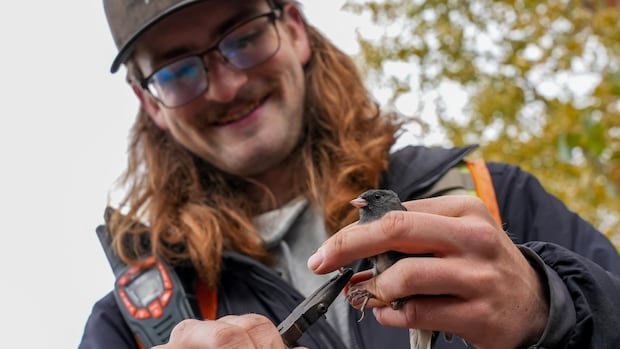
In the boreal forest near a series of nets, Ethan Denton, a Calgary-based ornithologist working in Fort McMurray, Alberta, carefully bands a dark-eyed junco, a small grey songbird, to track its migration patterns. Denton records the bird’s details before releasing it, contributing to a broader research effort spanning North America.
Ken Foster, a co-founder of the Wood Buffalo Wildlife Research Institute (WBWRI), oversees the operation, emphasizing the importance of monitoring bird populations in the oilsands region to understand and potentially reverse declines. The WBWRI, a unique non-profit organization in Fort McMurray, focuses on long-term bird monitoring initiatives.
While various organizations have conducted bird research in the oilsands region, Foster’s establishment of WBWRI in 2024 aims to provide stability and engage volunteers in wildlife research. Data collected by Foster indicates significant declines in certain bird species due to habitat changes caused by wildfires, industrial activities, and alterations in migration routes.
Foster’s research, supported by energy companies, aims to not only study bird populations but also enhance outreach and educational opportunities. Local studies like Foster’s are deemed essential by experts such as biology professor Erin Bayne from the University of Alberta, as they can identify local issues and inform relevant stakeholders.
In addition to bird banding initiatives, WBWRI plans to expand its research to include tracking tower operations for animals with radio transmitters and monitoring bat populations’ health. By involving volunteers in wildlife rehabilitation efforts and employing advanced tracking technologies, WBWRI aims to quantify and address the perceived decline in bird populations effectively.