
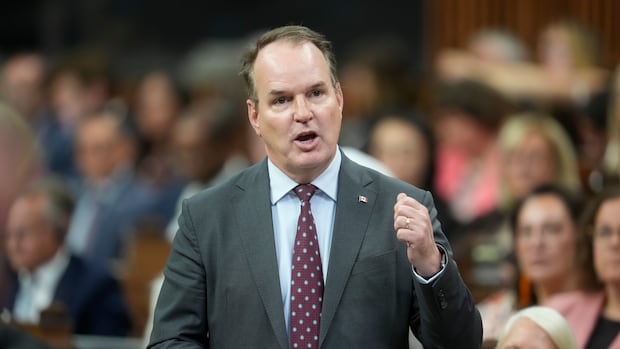
On Thursday, a significant element of the Carney administration’s economic strategy, Bill C-39, successfully passed its initial vote in the House of Commons, as both the Conservative Party and the majority of Liberal members agreed to forward the bill for examination by a dedicated committee.
This extensive 243-page legislation aims to broaden the government’s framework for major infrastructure initiatives to encompass additional projects nationwide.
The administration seeks to streamline the review process for these projects, advocating for a single assessment rather than multiple evaluations, with the goal of completing this review within a year.
This legislation is a fundamental aspect of the Liberals’ strategy to reduce economic dependence on the United States and to position Canada as a dependable trading ally in global markets.
Prior to the vote, Conservative Leader Pierre Poilievre indicated that his party would back sending the bill to committee to advocate for amendments, describing it as a “weak, watered-down, long-delayed” proposal.
Poilievre expressed to the media his desire for the government to accelerate project timelines to a range of six months to a year, while also incorporating protections for workers’ rights.
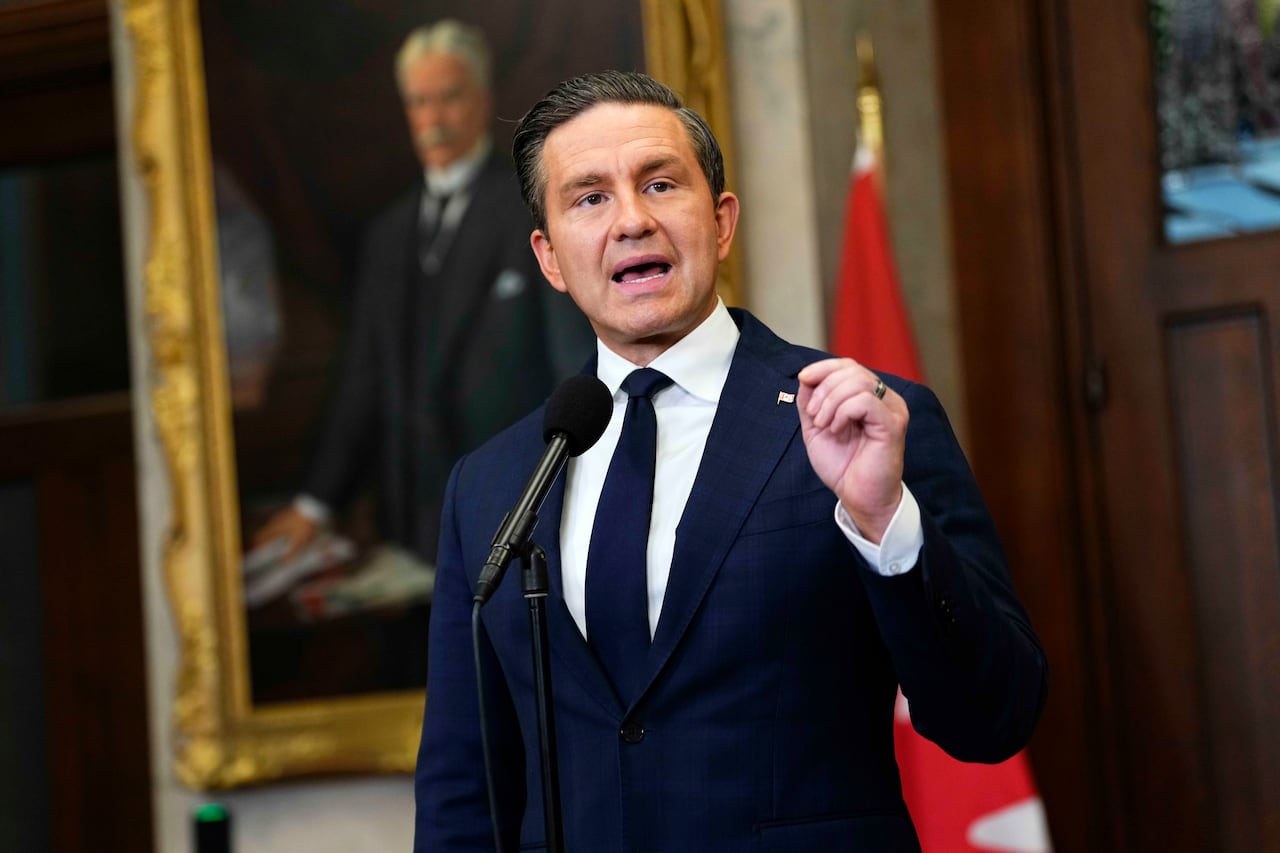
Conservative Leader Pierre Poilievre states that his party intends to propose amendments to Bill C-39. (Justin Tang/The Canadian Press)
Moreover, he mentioned that the Conservatives aim to abolish the industrial carbon pricing and establish “shovel-ready zones” that would have pre-permitted development processes.
Prime Minister Mark Carney’s administration will rely on a specially formed committee to analyze this comprehensive legislation. Comprising 11 members, the committee includes MPs from the Liberals, Conservatives, and Bloc Québécois, with the Liberals holding a majority.
Notably, the committee lacks representation from the NDP, which does not hold official party status in the House of Commons, a prerequisite for automatic inclusion on standing committees.
NDP House leader Don Davies reported that he requested the opportunity for his party to participate in the committee; however, Government House leader Steven MacKinnon declined his request, a decision Davies labeled as “fundamentally undemocratic.”
Green Party Leader Elizabeth May also mentioned that she sought committee standing but was similarly refused.
She characterized the bill as the “omnibus of omnibuses,” warning that it poses a risk of harming the environment in the pursuit of expedited construction.
“The current situation reveals that this Prime Minister’s Office exhibits greater disdain for Parliament and shows less regard for transparency and accountability than any prior PMO,” May stated during a press scrum before question period.
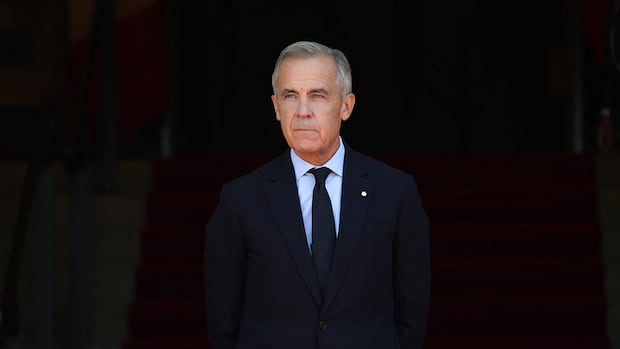
The federal government is advocating for Bill C-39 to expedite approvals for significant energy and infrastructure initiatives. Environmental organizations caution that it might diminish protections for water and wildlife, while the government assures that safeguards will remain intact.
At a press event on Thursday alongside labor and First Nations leaders, Davies and NDP Leader Avi Lewis emphasized that the legislation should not pass in its current form due to its implications for labor and treaty rights.
Lewis declared that the bill “must be discarded” because of the sweeping changes it would bring and the government’s inadequate consultation with Indigenous communities and other impacted groups, likening it to omnibus bills from the Stephen Harper era.
On Tuesday, B.C. Liberal MP Patrick Weiler criticized his own government’s bill during discussions in the House of Commons.
-
Critics accuse Carney government of proposing ‘sacrifice zones’ for the environment
-
Liberals table bill to speed up major project approvals, avert labour disruptions
Weiler mentioned that while he supports the overall direction of the bill, he is uneasy with C-39 granting cabinet the authority to expedite project timelines. He also cautioned that the one-year project timelines could compromise the government’s obligation to consult with Indigenous communities.
Lewis acknowledged Weiler’s “courageous stand” and noted he has received similar feedback from Liberal supporters.
Protesters gathered outside Parliament to voice their concerns regarding environmental and labor issues linked to the government’s new Bill C-39, also referred to as the Building Canada Strong Act. At least 11 individuals were arrested during the demonstrations.
“There are individuals within the progressive Liberal sphere who are troubled by this bill, and I urge more of them to express their concerns before it’s too late,” Lewis remarked.
When asked how he would implement the strict timelines he suggested while allowing enough time for Indigenous communities and other stakeholders to review the proposals, Poilievre stated that Indigenous peoples have already consented to an ambitious infrastructure agenda.
“Indigenous people desire to build, and I believe that Indigenous Canadians could become the wealthiest individuals globally if we unlock our resources, remove governmental barriers, and commence construction,” Poilievre asserted.
Additionally, on Thursday, Cold Lake First Nations initiated a legal challenge in Federal Court against the federal government’s designation of the Pacific Link pipeline as a project of national interest, claiming insufficient consultation with them regarding the project.
Chief Shelly Moore-Frappier from the Teme Augama Anishinabek nation conveyed during Thursday’s press conference that her community does not oppose development, but the current legislation must not be passed in its present form.
She expressed her desire for amendments that would require the government to secure Indigenous consent for projects, eliminate the consultation deadlines outlined in the legislation, and mandate companies to remediate former industrial sites.
“Last year, I informed the Senate that Bill C-5 represented economic coercion. Ottawa employed the threat of tariffs to pressure First Nations, and we were depicted as the issue,” Moore-Frappier recounted, referring to the Carney government’s earlier major projects law.
“We were assured that the fast-tracking was temporary. C-39 institutionalizes it as a permanent measure.”
She noted that her community is situated over deposits of copper, cobalt, platinum, and other essential minerals, in addition to inactive mines that have not been cleaned up.
The government maintains that it will fulfill its obligation to consult Indigenous groups regarding projects and contends that the legislation does not infringe upon the right to strike.
Bill C-39 introduces new stipulations regarding the conditions under which the jobs minister can intervene in labor disputes within federally regulated sectors.

During a press conference discussing the new major projects bill, Canadian Labour Congress president Bea Bruske asserts that while workers in Canada are eager to assist in the U.S. trade conflict, ‘we cannot have our elbow up against Trump with our hands tied behind our backs at bargaining tables.’
Bea Bruske, president of the Canadian Labour Congress, criticized C-39 on Thursday, labeling it an infringement on workers’ rights.
Bruske pointed out that modifications intended to delineate a minister’s authority to halt a work stoppage when “national interest” is at stake fundamentally undermine unions’ leverage to threaten strikes for bargaining advantages.
Jobs Minister Patty Hajdu has asserted that the federal government will not compromise on workers’ right to strike. However, she did not provide a direct response when queried at the Senate earlier this week about whether the bill might impose restrictions on that right.
The Liberals maintain that proposed changes to the Canada Labour Code within the bill will establish “guardrails” around the minister’s capacity to intervene in labor disputes.
Poilievre mentioned that the Conservatives would also introduce amendments in committee aimed at safeguarding workers’ rights, although he did not disclose any specifics.