
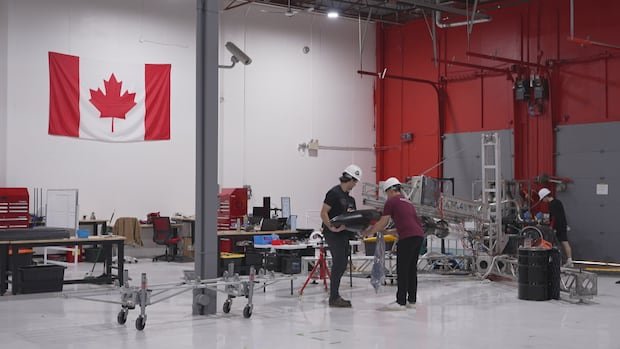
Canada is the only G7 nation without its own rocket launch capabilities, prompting a race among Canadian companies to develop a domestic rocket system. This initiative comes as concerns arise among SpaceX customers about potential reduced access to orbital rides. The complexity of the task, coupled with shifting government priorities and tight deadlines, complicates the journey to establish Canadian space launch capabilities.
Without the ability to launch rockets domestically, Canadian customers rely on external providers, predominantly American ones such as SpaceX, for satellite deployment services. These satellites play crucial roles in telecommunications, military operations like threat detection, and earth observation tasks like wildfire monitoring, according to Marc Boucher, the founder of SpaceQ, a Canadian space publication.
To address this dependency and ensure sovereignty in space activities, the Canadian government has designated space as a key sovereign capability in its Defense Industrial Strategy. Legislation introduced in April aims to authorize launches from Canadian soil, with recent funding injections including $8.3 million each for three Canadian companies striving to achieve light-lift rocket capabilities by 2028.
Among these companies is NordSpace, which encountered an unsuccessful suborbital rocket test in 2025 but plans for another attempt soon. Reaction Dynamics, another player, is developing a unique engine design since 2017. The newly established Canada Rocket Company aims to build a medium-lift rocket by 2032, attracting private investments and government support.
As SpaceX transitions to the larger Starship vessel, concerns arise about the future availability of its Falcon 9 rocket for satellite launches. This shift could impact smaller players reliant on SpaceX’s rideshare program. CEO Mina Mitry of Kepler anticipates that competitors like Rocket Lab may fill this void, emphasizing the importance of having a Canadian rocket provider.
The push for Canadian rocket capabilities faces challenges such as funding constraints, requiring substantial investments and rigorous testing. Despite the optimism and progress seen in the industry, uncertainties persist, highlighting the long-term commitment needed to establish a robust space launch infrastructure in Canada.