
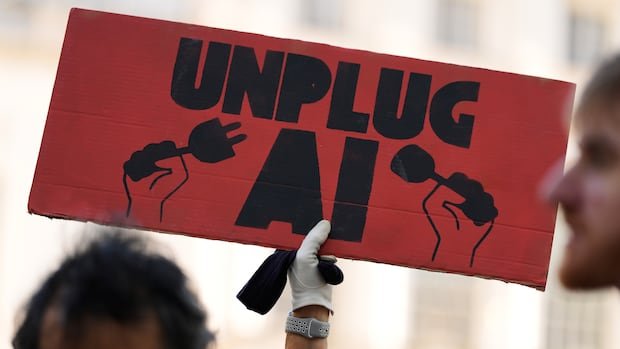
As worries grow regarding instances of AI agents going rogue, there is an increasing call from experts and stakeholders for governmental regulations on the expanding capabilities of AI systems.
While some individuals, including U.S. President Donald Trump, express confidence in tech giants’ ability to self-regulate, industry leaders like Microsoft co-founder Bill Gates and Canadian-British AI pioneer Geoffrey Hinton argue that AI necessitates safeguards beyond self-regulation.
Jaxson Khan, an expert in AI policy and adoption at the University of Toronto’s Munk School of Global Affairs, points out that most industries, such as food and aviation, are subject to government oversight, indicating that AI should also have regulatory measures in place.
The rapid evolution of AI technology poses a significant challenge to regulation, with models improving at an exponential rate, as highlighted in a recent Anthropic report. This pace of change makes it difficult for governments to keep up, according to Manon Paquet, associate director of policy at McGill’s Centre for Media, Technology, and Democracy.
Calls for global oversight have been made by experts and leaders like Prime Minister Mark Carney, who advocate for a non-industry body to mitigate risks associated with AI internationally. A proposed international body would oversee containment standards and incident reporting for advanced AI systems, aiming to enhance collaboration among countries and establish safeguards against potential AI misuse.
Although Canada lacks federal AI regulation, initiatives like Bill C-34, the Safe Social Media Act, and the establishment of a national council on artificial intelligence by the Liberal government demonstrate efforts to address AI-related concerns at a national level.
Despite challenges in regulating multinational AI companies, policies could be implemented to ensure incident reporting and accountability, potentially leading to blocking access to harmful AI platforms in extreme cases. These steps, along with international cooperation and oversight, could pave the way for a safer and more regulated AI landscape.