
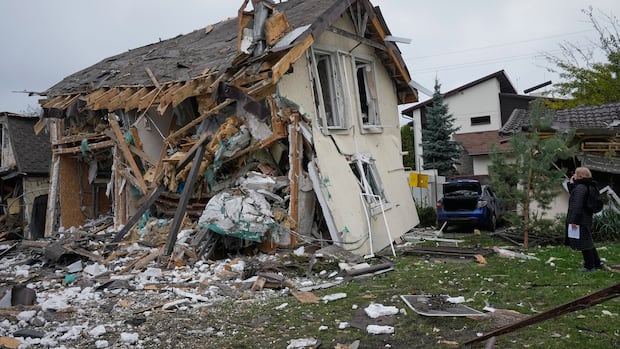
Kyiv was struck by Russian ballistic missiles while Ukraine unleashed hundreds of drones targeting Moscow overnight, as both nations continued their offensive operations amid recent U.S. efforts to bring about a resolution to the conflict.
On Wednesday, Russia announced its willingness to reinitiate U.S.-brokered discussions with Ukraine in the upcoming month, following a meeting between Russian President Vladimir Putin and U.S. envoy Steve Witkoff in St. Petersburg.
Ukrainian President Volodymyr Zelenskyy, however, made a sarcastic remark regarding Witkoff, who previously referred to Putin as a “humanitarian” after the release of American Stephen Hubbard, who is currently serving a prison sentence in Russia, for his repatriation to the U.S.
“Since last night, Russian ‘humanitarians’ have launched three waves of ballistic missiles at Kyiv,” Zelenskyy stated on X. “They deployed 21 missiles. Regrettably, many locations throughout the city have been struck and sustained damage.”
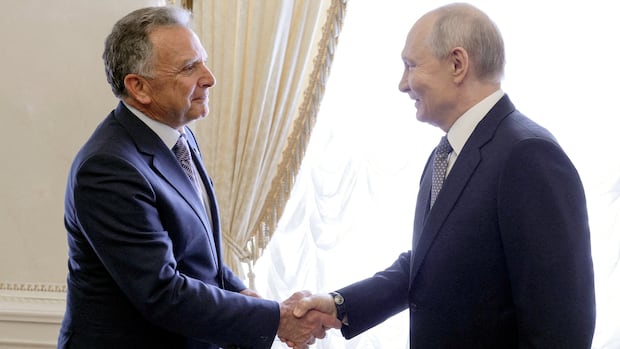
U.S. special envoy Steve Witkoff praised Russian President Vladimir Putin as a ‘humanitarian’ at a meeting in St. Petersburg aimed at ending the Ukraine war, despite no Ukrainian presence at the table. U.S. officials later suggested Putin is open to trilateral meetings with Washington and Kyiv.
Zelenskyy reported that two individuals lost their lives and 34 were injured, including five children, due to assaults across a dozen regions in Ukraine.
According to Ukraine, Russia launched a minimum of 21 ballistic missiles in three separate waves. Meanwhile, Russia claimed that Ukraine dispatched 630 drones toward the capital, Moscow, during the night.
The two nations also exchanged war casualties, with Moscow handing over 252 bodies while Ukraine returned 25, as reported by the Belta state news agency in Belarus. Such exchanges have historically been linked to negotiations.
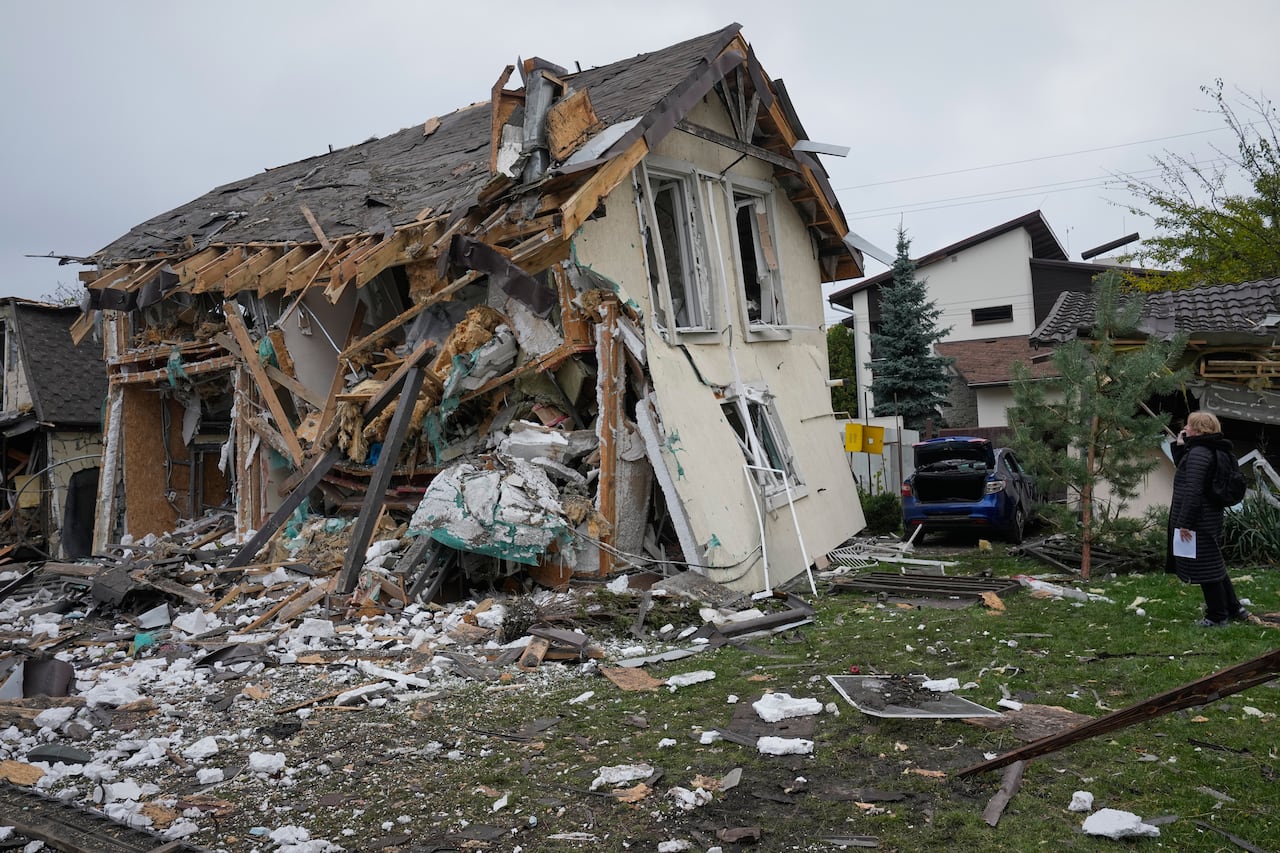
The Russian assault caused damage to residential areas, transportation systems, and other civilian structures in various districts of Kyiv, according to Ukrainian officials. (Efrem Lukatsky/The Associated Press)
At least 1 killed in Russia
Russia stated that it executed a “massive strike” overnight targeting port facilities in Ukraine’s Odesa region, as well as vessels associated with the Ukrainian military.
In Moscow, Mayor Sergei Sobyanin reported that two people were injured from drones aimed at the capital during the night. He mentioned that most of the drones were intercepted at a considerable distance.
In Belgorod, a Russian border region, local authorities confirmed that one person was killed and another injured by Ukrainian drones.
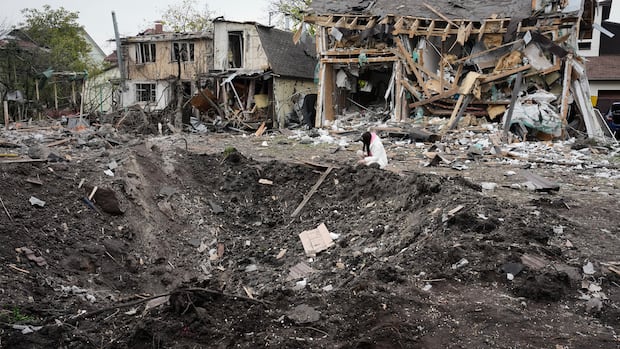
Russia targeted Kyiv and other Ukrainian cities overnight with a barrage of missile strikes while Ukraine sent hundreds of drones to Moscow. The latest attacks occurred after Russian President Vladimir Putin met with U.S. envoy Steve Witkoff on Wednesday and agreed to peace talks. Ukrainian officials say nine people were killed in the latest wave of airstrikes.
As the frontlines have remained relatively unchanged, both sides have intensified their long-range air assaults this year. Russia has primarily focused on the Ukrainian energy grid, while Ukraine has targeted Russian oil refineries. Both nations have also struck data centers, commercial storage facilities, and shipping in the Black Sea.
Russia asserts that it initiated this conflict, the most lethal in Europe since World War II, partly to stop Ukraine from joining NATO. It has continually insisted that it will not cease hostilities unless Ukraine relinquishes more territory, restricts its military size, and is permanently prohibited from forming alliances.
Ukraine maintains that the invasion was an unjustified act of aggression and has consistently rejected Russia’s demands to conclude the conflict—including the requirement to hand over the entire Donbas region—as a call for capitulation that would render it vulnerable to future Russian offensives.
No significant progress was made during three brief meetings in Istanbul last year and three rounds of U.S.-facilitated discussions in Abu Dhabi and Geneva earlier this year.
-
Why Canadian Starlink subscribers (probably) shouldn’t worry about U.S interference
-
Canada’s Russian envoy returns with advice on how to hit back against Putin
Earlier this week, Zelenskyy also met Witkoff in Oslo. While Witkoff noted “some degree of momentum” following discussions with the Ukrainian leader and European and NATO officials, the Kremlin expressed skepticism.
Kremlin aide Yuri Ushakov remarked, “The Americans perceived some new nuances [in Oslo] and conveyed that to us. However, these nuances do not fully meet our expectations.”
Zelenskyy’s meeting with Witkoff aimed to address a recent decline in relations with Washington this month, triggered by U.S. President Donald Trump’s announcement of a deal to purchase Russian diesel and the lifting of sanctions against Moscow.

Ukrainian forces say they completed the world’s first front-line aerial drone evacuation of an injured soldier. Andrew Chang explains how, breaking down engineering challenges and physical risks behind the operation.
Images provided by The Canadian Press, Reuters, Adobe Stock and Getty Images
Kyiv has also reported that starting from October 4, Washington has not provided timely warning data regarding Russian missile launches, restricted the SpaceX satellite system utilized to direct Ukrainian drones, and withheld missile defense systems procured on its behalf by European nations.
Conflicting explanations have been offered by U.S. and Ukrainian officials, as well as SpaceX CEO Elon Musk, regarding the disruptions. However, Ukrainian and European officials suspect political motivations, given that the actions followed Trump’s request for Ukraine to cease strikes on Russian oil refineries.
Trump’s criticisms directed at Ukraine have not been mirrored concerning the significantly more lethal Russian strikes on Ukraine. On Monday, Trump remarked that Russia’s conduct in Ukraine has been “acceptable.”
Zelenskyy, who has typically refrained from criticizing the Trump administration, has increasingly voiced opposition to what he perceives as a growing sympathy towards Moscow.